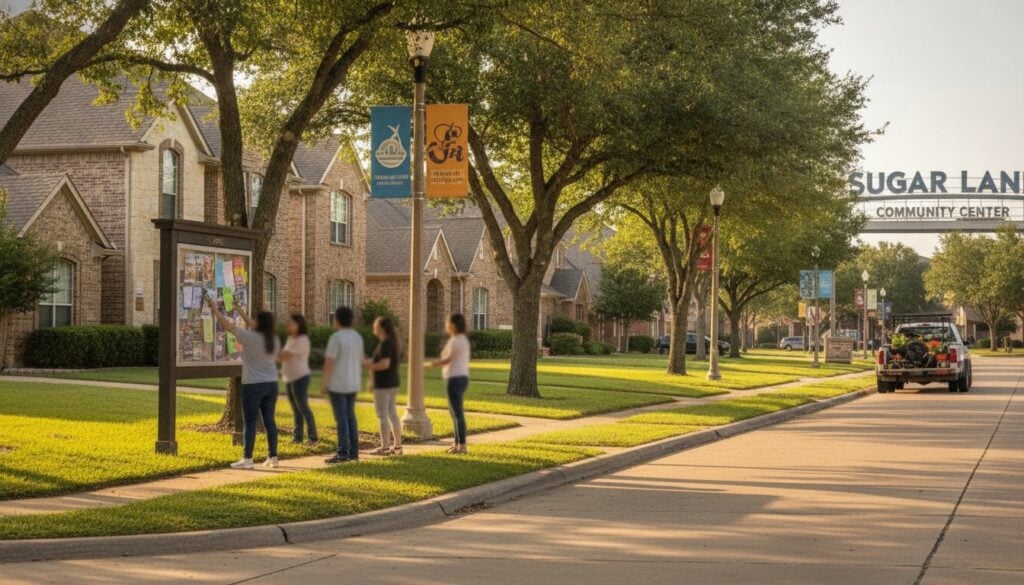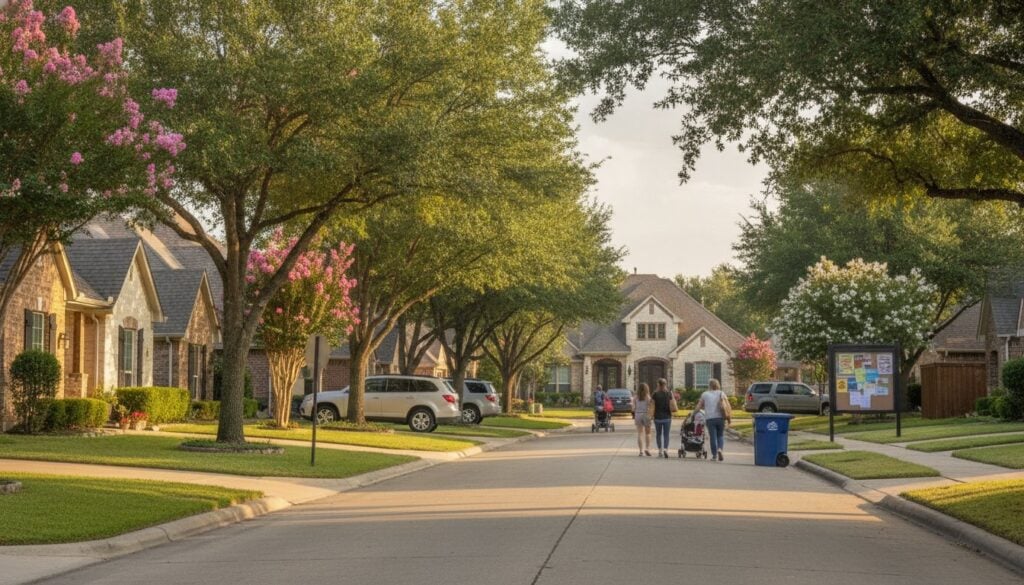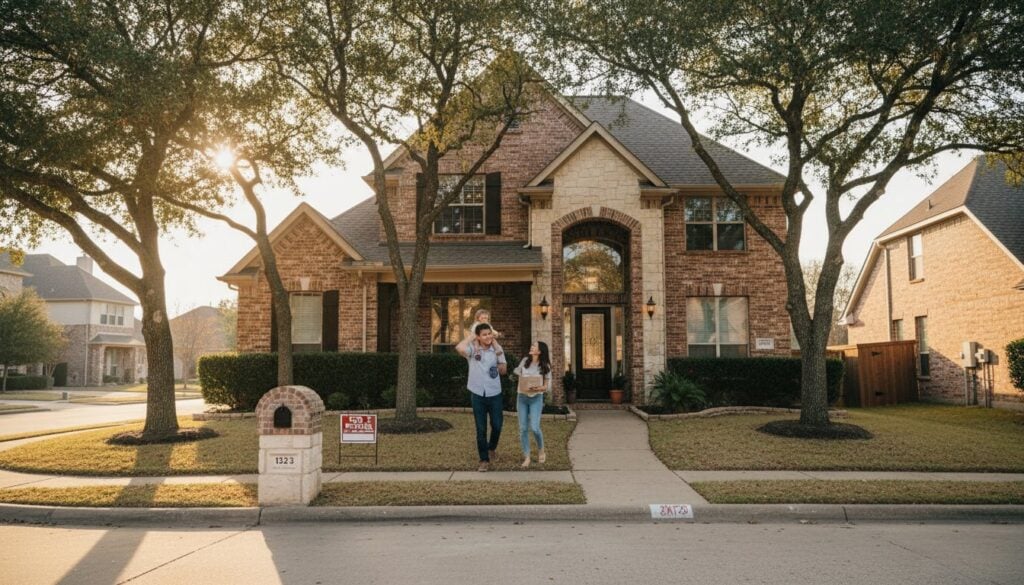
Cypress, TX sits roughly 25 miles northwest of downtown Houston, and right now it is one of the most active landing spots for buyers leaving Harris County’s core. You are stepping into a market shaped by real population momentum, not hype. The Texas A&M Real Estate Research Center documented this pattern in a 2025 study on what researchers called the “donut effect” – Harris County residents pushing outward into surrounding suburbs, with Northwest Harris County corridors like Cypress absorbing a significant share of that movement. That means competition is real, inventory moves faster than many first-time buyers expect, and preparation matters more than luck.
Why Cypress Keeps Attracting First-Time Buyers
The Price-to-Space Equation
Cypress consistently offers more square footage per dollar than inner-loop Houston neighborhoods. Entry-level homes typically range from the high $200,000s to the mid $400,000s depending on the subdivision and lot size, so your purchasing power stretches further here. That tradeoff is a longer commute in exchange for newer construction, larger yards, and lower property tax rates in some pockets compared to certain Houston ZIP codes.
A Community That Is Still Growing In
New businesses are arriving alongside new residents. In April 2026 alone, Cypress Sunrise Cafe opened along Jones Road serving breakfast and brunch, and P. Terry’s set its official Cypress opening for April 27, according to Community Impact. Smile Factory Dental, owned by Dr. Ali Daham and offering general, cosmetic, and emergency dental services, also opened its doors in Cypress that same month. That kind of retail and service growth signals a maturing community, which is good news for long-term home values.
Cy-Fair ISD as a Buyer Motivator
Cy-Fair Independent School District is one of the largest in Texas and draws families from across the Houston metro. For a first-time buyer with children or plans to start a family, being zoned to a well-regarded district adds long-term value beyond the school years themselves. Homes in top-rated Cy-Fair zones tend to hold resale value more steadily during soft markets.
Get Your Financial House in Order First
Know Your True Budget Before You Tour a Single Home
Most lenders pre-qualify you for the maximum you can borrow. That number and the number you should actually spend are not the same thing. A safe rule of thumb is keeping total housing costs, including principal, interest, property taxes, insurance, and HOA fees, at or below 28 percent of your gross monthly income. In Cypress, property tax rates in Harris County typically run between 2.0 and 2.5 percent of assessed value annually, so build that into your monthly estimate from day one.
Credit Score Ranges and What They Cost You
A conventional loan typically requires a 620 minimum credit score, but scoring above 740 usually unlocks the best interest rate tiers. Translation: a 60-point difference in your score can mean $100-200 more or less per month on a $350,000 mortgage. Pull your credit report at annualcreditreport.com before you do anything else. Dispute errors, pay down revolving balances, and avoid opening new credit lines in the six months before applying.
Down Payment Options for Texas Buyers
You do not need 20 percent down to buy in Cypress. FHA loans allow as little as 3.5 percent down for buyers with a 580 or higher credit score. Conventional loans can go as low as 3 percent for first-time buyers through programs backed by Fannie Mae or Freddie Mac. Texas also has state-level assistance worth knowing about. The Texas State Affordable Housing Corporation, known as TSAHC, offers down payment grants of up to 5 percent of the loan amount to qualifying buyers. The Texas Department of Housing and Community Affairs, TDHCA, runs the My First Texas Home program, which pairs a 30-year fixed mortgage with down payment and closing cost assistance. Income and purchase price limits apply, so check current TSAHC and TDHCA guidelines before assuming you qualify.
Closing Costs Are Not Optional
First-time buyers often budget for the down payment and forget about closing costs. In Texas, closing costs typically run 2-5 percent of the purchase price on top of your down payment. On a $350,000 home, that is $7,000-17,500 in additional cash needed at the table. Some sellers will negotiate a closing cost credit, especially when inventory is softer, but you cannot count on it in a competitive Cypress neighborhood.
Understanding the Cypress Neighborhoods
Master-Planned Communities
Cypress is home to several large master-planned communities, including Bridgeland, Towne Lake, and Cypress Creek Lakes, among others. These communities typically feature amenity packages, walking trails, community pools, and active HOAs. The tradeoff is that HOA fees, which often run $80-200 per month, add to your monthly housing cost. Review the HOA’s financial statements and rules before you fall in love with a specific home.
Established vs. New Construction
You will find both resale homes from the 1990s and 2000s and brand-new construction on opposite ends of the price spectrum in Cypress. Established neighborhoods often offer more mature trees, larger lots, and negotiation room. New construction typically means builder warranties and modern floor plans, but the base price rarely reflects the upgrades you will want. Builders in this area frequently offer incentives tied to using their preferred lender, which can save or cost you money depending on the rate offered. Compare that lender’s rate against at least two outside quotes before committing.
Flood Zone Awareness
Parts of Harris County experienced significant flooding during Hurricane Harvey in 2017. Not all of Cypress was equally affected, but flood zone status varies by street and even by lot. FEMA flood maps are public record. Ask your real estate agent to pull the flood zone designation for any property you consider. If a home sits in a Special Flood Hazard Area, federally backed loans typically require flood insurance, which adds $800-2,500 or more to your annual costs depending on the coverage level.
The Mortgage Process, Step by Step
Pre-Approval vs. Pre-Qualification
Pre-qualification is an estimate based on self-reported numbers. Pre-approval involves a lender pulling your credit and verifying income and assets. In a competitive Cypress market, sellers and their agents treat offers backed by pre-approval letters far more seriously. Get pre-approved, not just pre-qualified, before you write your first offer.
Choosing the Right Loan Type
Conventional, FHA, VA, and USDA loans each fit different buyer profiles. VA loans, available to eligible veterans and active-duty service members, require no down payment and no private mortgage insurance, which can save $200-400 per month compared to FHA on the same loan amount. USDA loans also offer zero-down options but only in eligible rural or semi-rural areas, so confirm USDA eligibility on the specific Cypress address since coverage boundaries shift. FHA is often the most accessible path for buyers with lower credit scores or limited savings. Conventional loans reward buyers with stronger credit and larger down payments with lower long-term costs.
Rate Locks and Timing
Once you go under contract, your lender will offer a rate lock window, typically 30-60 days. Rates can move meaningfully in that window. A 0.25 percent rate increase on a $350,000 loan adds roughly $50-60 per month. Ask your lender what the float-down options are and at what cost, especially if rates are trending downward when you apply.
Making a Competitive Offer in Cypress
Pricing Your Offer with Real Data
The Houston Association of Realtors, HAR, publishes monthly market statistics at the ZIP code level. Before writing an offer, look at what comparable homes have sold for in the past 60-90 days, not the list prices. Days on market and list-to-sale price ratios tell you whether you are in a bidding environment or one where negotiation is expected. That data shapes how aggressive or conservative your initial offer should be.
Option Period and Earnest Money
Texas residential contracts use an option period, typically 7-10 days, during which you pay an option fee, usually $200-500, for the unrestricted right to back out. This is separate from earnest money, which typically runs 1 percent of the purchase price and is held in escrow. If you back out during the option period, you forfeit the option fee but keep your earnest money. After the option period ends, backing out without a contract-approved reason puts your earnest money at risk.
What to Ask For Beyond Price
In a moderate market, there is room to negotiate items beyond the purchase price. Closing cost contributions from the seller, a home warranty, specific repairs identified during inspection, and the closing timeline are all negotiable terms. First-time buyers often focus entirely on price and leave real value on the table in these other areas.
Home Inspections: What to Know Before You Waive Anything
What a Texas-Licensed Inspector Covers
TREC licenses and regulates home inspectors in Texas. A standard inspection covers the foundation, roof, electrical systems, plumbing, HVAC, and more. In Cypress, where homes from the late 1990s and 2000s are common, pay particular attention to HVAC age and condition since systems over 15 years old are nearing replacement territory, and foundation pier-and-beam or slab issues that can appear in areas with expansive clay soils.
Specialty Inspections Worth the Cost
A general inspector will flag obvious issues but is not a licensed specialist in every trade. Consider adding a sewer scope inspection on homes older than 15 years, which typically costs $150-300 and can reveal root intrusion or collapsed lines before you close. A foundation specialist evaluation makes sense if the inspector notes any cracks or door-frame anomalies. These small investments protect a large purchase.
Negotiating After the Inspection
The inspection report is not a punch list you hand the seller for every item. Focus your repair requests on safety issues, structural concerns, and items that would be material to resale. Asking for cosmetic fixes often irritates sellers and can kill deals over minor amounts. Think of it as a triage process: address what genuinely matters, let the rest go.
First-Time Buyer Programs Specific to Texas
TSAHC Home Sweet Texas
The Texas State Affordable Housing Corporation’s Home Sweet Texas program is available to buyers at or below 80 percent of area median income in their county. It pairs a competitive fixed-rate mortgage with a grant of up to 5 percent of the loan amount for down payment and closing costs, so the grant does not need to be repaid. That said, income limits and home price limits apply and change periodically, so confirm current figures directly on the TSAHC website before building a budget around it.
TDHCA My First Texas Home
The Texas Department of Housing and Community Affairs offers a 30-year fixed-rate mortgage at below-market interest rates combined with down payment assistance of up to 5 percent of the loan amount through the My First Texas Home program. You are not alone in using this route, as thousands of Texas buyers have used TDHCA programs to close their first purchase. The assistance is structured as a second lien with no monthly payments due, forgiven over time provided you remain in the home.
HUD-Approved Housing Counseling
HUD-approved housing counseling agencies offer free or low-cost pre-purchase education that many assistance programs require. Beyond the checkbox, the counseling is genuinely useful. A HUD-certified counselor will walk through your full financial picture, help you identify which loan and assistance programs fit your situation, and flag issues with your credit or debt load before a lender does it under pressure. Find a local agency through the HUD website using your Cypress ZIP code.
Closing Day and What Comes After
What Happens at the Title Company
In Texas, closings typically happen at a title company, not a law office. You will sign a stack of documents covering the loan, the deed, and various disclosures. Bring a government-issued photo ID and a cashier’s check or wire transfer for any remaining funds due. Wire fraud targeting real estate transactions is a real risk, so always verify wiring instructions by calling the title company directly using a number you find independently, not one from an email.
Homestead Exemption: File It Immediately
Texas homeowners who occupy their property as a primary residence qualify for a homestead exemption that reduces the taxable value of the home by $100,000 for school district taxes as of recent legislative changes. That typically translates to meaningful annual savings. You must file the application with the Harris County Appraisal District after January 1 of the year following your purchase. Missing a year costs real money, so put a reminder in your calendar the moment you close.
Building Equity in a Growing Market
The Texas A&M Real Estate Research Center’s donut effect research confirms that suburban markets like Cypress benefit from sustained inbound demand. That demand supports values over time, but it does not guarantee appreciation in any single year. Make your decisions based on how long you plan to stay. Buyers who hold a Cypress home for five or more years typically have enough time for appreciation and equity buildup to more than offset transaction costs on both ends of the deal.
For a deeper look at the full purchase process, the first-time home buyer tips page covers the end-to-end sequence in plain language. If you want to see what is available in your price range right now, you can search active Cypress listings and filter by price, beds, and school district. And if you ever want a second opinion on a specific property before you write an offer, schedule a call to talk through the numbers. Some buyers also find it helpful to understand how a trade-in program works if a future move is already in the back of your mind. For those who are still weighing buying versus other paths, the rent-to-own overview lays out when that route makes more sense than a traditional purchase.
Buying your first home in Cypress is a real, achievable goal. The programs exist, the neighborhoods are established, and thousands of first-time buyers close here every year. The choice of neighborhood, loan type, and timeline depends on what matters most to your situation. Get pre-approved, know your flood zone, file your homestead exemption, and work with someone who knows this specific market. That combination puts you in a strong position from the start.