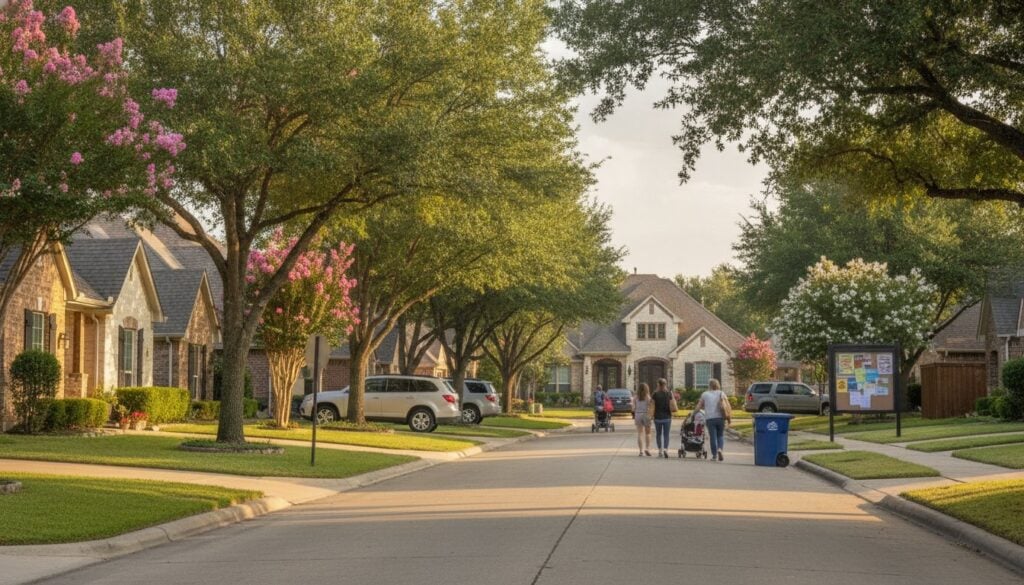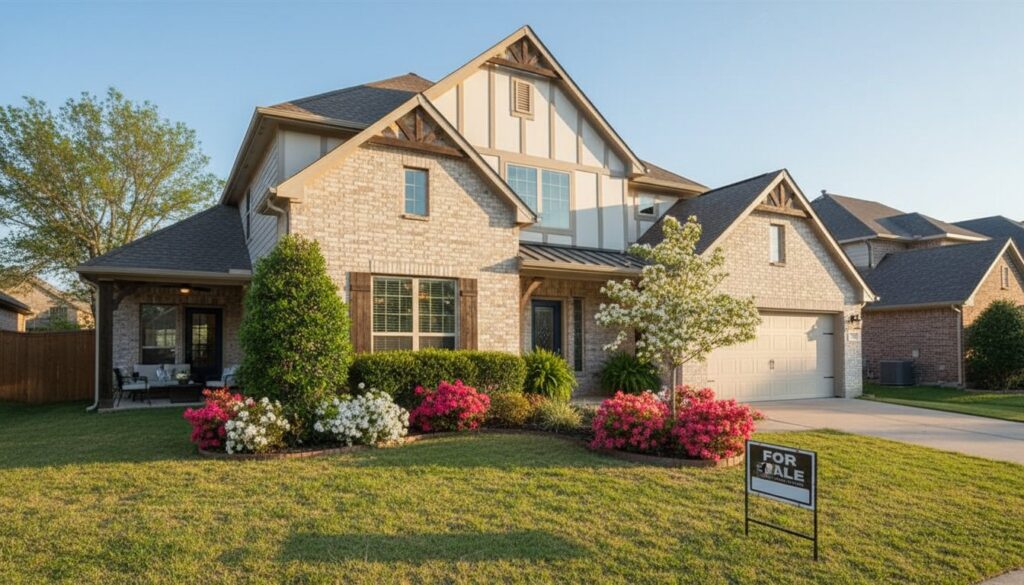
Spring, Texas is one of the most active suburban markets in the Greater Houston area, and right now it is also one of the most competitive for sellers. Inventory across Spring’s major ZIP codes sits between 4.8 and 7.9 months, which means buyers have choices. That is not a reason to panic, but it is a reason to have a plan before you put a sign in the yard.
Understanding the Spring TX Market Before You List
What the ZIP Code Data Actually Tells You
Spring spans several ZIP codes, and they do not all behave the same way. The tightest supply is in 77381, where inventory sits at roughly 4.8 months, which leans toward balanced conditions. The loosest supply is in 77388, where 7.9 months of inventory clearly favors buyers.
Translation: the ZIP code your home sits in shapes your pricing strategy and your timeline. A seller in 77381 has more negotiating room than a seller in 77388, even if the homes are similar.
Median Prices by ZIP Code
The table below shows last-90-day data for Spring’s main ZIP codes. Use this as a starting reference, not a final price. A licensed agent with access to HAR’s full sold-comp data will give you a tighter range for your specific street and floor plan.
| ZIP Code | Median Sold Price | Active Listings | Months of Inventory | Sold (Last 90 Days) |
|---|---|---|---|---|
| 77373 | $262,400* | 894 | 6.2 | 480 |
| 77379 | $263,250 | 814 | 6.7 | 416 |
| 77381 | $135,000* | 345 | 4.8 | 227 |
| 77382 | $255,000 | 492 | 7.0 | 260 |
| 77386 | $360,500* | 828 | 6.1 | 483 |
| 77388 | $189,000 | 631 | 7.9 | 266 |
| 77389 | $359,250 | 515 | 7.1 | 246 |
| 77380 | $374,700* | 356 | 5.5 | 158 |
*Some ZIP code medians in this dataset reflect a narrow or mixed property mix. Verify with a full CMA from a licensed agent before pricing your home.
What Buyers Are Facing Right Now
The national 30-year fixed mortgage rate is sitting at 6.3% as of late April 2026, according to Freddie Mac’s PMMS data. At that rate, a buyer financing $300,000 carries a principal-and-interest payment around $1,850 per month. That payment sensitivity is exactly why your list price needs to land cleanly in the range buyers are searching, not just above it.
New listings across the country jumped 21.2% from February to March 2026, according to Realtor.com senior economist Jake Krimmel, cited by Keeping Current Matters. That is a larger-than-normal seasonal surge. More listings mean more competition for your home. Price and condition matter more, not less, in that environment.
Pricing Strategy: The Most Important Decision You Make
Comparative Market Analysis vs. Automated Valuation
An automated valuation model, the kind you get from Zillow or a national aggregator, pulls broad comps. It does not know that your street backs to a greenbelt, or that a competing listing two blocks away just dropped its price $15,000. A Comparative Market Analysis from a Pricing Strategy Advisor (PSA) accounts for those details.
That said, automated tools are useful for a quick sanity check. If your home shows up at $280,000 on three different tools and your gut says $320,000, that gap deserves a conversation before you list.
The Danger of Overpricing in a High-Inventory Market
In a market with 6-8 months of inventory, overpriced homes sit. Days on market accumulates fast, and buyers treat a stale listing as a sign something is wrong. The longer it sits, the more you will eventually reduce, often ending up below where a sharp original price would have landed you.
Think of it as a first-impression problem. Buyers in Spring have 800+ active listings to choose from in most ZIP codes. Your home gets one shot at being new and fresh. Price it right on day one.
Pricing Brackets and Buyer Search Behavior
Most buyers search in clean increments: $250,000-$275,000, $275,000-$300,000, and so on. Pricing at $301,000 when your comparable homes trade at $295,000-$305,000 knocks you out of the dominant search bracket. A good agent will show you where the search traffic concentrates and price your home to appear in the right filter.
Preparing Your Home to Compete
First Impressions: Curb Appeal and Entry
Spring’s climate is hard on exteriors. Heat, humidity, and seasonal storms chip paint, stain driveways, and kill grass patches. Before you list, walk your property the way a buyer would, starting at the curb. Fresh mulch, a power-washed driveway, and a repainted front door cost a few hundred dollars and typically return multiples in perceived value.
Bright homes do. Buyers decide within seconds whether they feel comfortable in a space, and light is the fastest way to trigger that feeling. Open every blind, replace any burned-out bulbs, and consider higher-wattage LEDs in darker rooms.
Kitchen and Bath Priorities
Kitchens sell homes. You do not need a full remodel, but dated hardware, dingy grout, and water-stained faucets drag down an otherwise solid kitchen. Focus on:
- Cleaning and re-caulking tile grout
- Replacing cabinet pulls and drawer hardware
- Deep-cleaning or resurfacing appliances
- Ensuring all fixtures are free of hard-water staining
Bathrooms follow the same logic. Buyers mentally add up repair costs as they walk through. Keep that mental tally as low as possible.
Repairs That Buyers Will Negotiate Anyway
A Texas buyer has an option period, typically 5-10 days, to inspect your home and request repairs. Common inspection items in Spring-area homes include HVAC age, roof condition, attic insulation, and foundation drainage. Addressing the obvious ones before listing removes leverage from the buyer’s side of the repair negotiation.
You are not obligated to fix everything. But going in with a clean pre-listing inspection report, or at minimum knowing what is there, means fewer surprises at the worst possible moment.
If your home needs more work than you want to take on, a renovate-and-sell program can front the cost of updates and recoup them at closing, so you are not out of pocket before you sell.
The Listing Process Step by Step
From Decision to Active Listing
- Interview agents and sign a listing agreement. Texas law requires a written representation agreement. TREC regulates the forms.
- Complete your Seller’s Disclosure Notice. Texas requires sellers to disclose known material defects. This is a legal document, not optional.
- Order a pre-listing inspection (optional but recommended). Typically $300-500 and gives you a clean information baseline.
- Prepare and stage the home. Deep clean, declutter, address cosmetic repairs, and complete professional photography.
- Set list price and go active on HAR/MLS. Your agent will syndicate to Zillow, Realtor.com, and other portals automatically.
- Review offers during the showing period. In a 6-7 month inventory market, plan for 2-4 weeks of active showings before a strong offer materializes.
- Execute a contract and open escrow. Buyer deposits earnest money, option fee is paid, and the clock starts on the option period.
- Clear inspection, appraisal, and underwriting. Each stage has its own timeline and potential renegotiation points.
- Final walk-through and closing. Seller signs deed, receives proceeds, transaction records with Harris County.
Timing Your List Date
Spring, Texas historically sees its strongest buyer activity from March through June, which aligns with the national pattern. Realtor.com data, cited by Keeping Current Matters, shows new listings surging above normal in spring 2026. More buyers are active, but more competing homes are also hitting the market. List early in the cycle, ideally February or March, to catch motivated buyers before supply peaks.
Offers, Negotiation, and the Option Period
Reading an Offer Beyond the Price
A high offer price with a long option period, a low earnest deposit, and multiple contingencies may net you less than a slightly lower offer with a clean structure. Evaluate every term, not just the headline number.
Key offer terms to compare side by side:
- Sales price relative to your list price
- Earnest money amount (typically 1% of purchase price in this market)
- Option fee and option period length
- Financing type (conventional, FHA, VA, cash)
- Requested closing date and possession timeline
- Repair requests or seller concessions
- Appraisal waiver or gap coverage clause
Seller Concessions in a Buyer-Leaning Market
With inventory at 6-8 months in most Spring ZIP codes, buyers are asking for concessions more often. Closing cost contributions of 2%-3% of purchase price are common requests, especially from buyers using FHA financing. The tradeoff is that a concession keeps a buyer in the deal who might otherwise walk, and it can be priced into your net sheet from the start.
That said, concessions are negotiable. You are not required to accept any term, and a good agent will help you counter strategically rather than just splitting the difference.
What Happens During the Option Period
Texas gives buyers an option period, a set number of days during which they can terminate the contract for any reason. Most Spring-area contracts run 5-10 days. During this window, the buyer will schedule a home inspection and possibly a specialty inspection (foundation, HVAC, roof). Their inspector will produce a report, and you will likely receive a repair request or amendment to the contract.
You have three choices: agree, counter, or decline. The buyer can then accept your response or terminate. This negotiation is separate from price and often where deals fall apart. Knowing your home’s condition in advance keeps you in a stronger position. For a full walkthrough of what to expect, the offer process page covers each stage in plain language.
Seller Costs and Net Proceeds
What Sellers Typically Pay at Closing
Texas closing costs for sellers typically run 7%-10% of the sale price when you include agent commissions, title, and miscellaneous fees. On a $263,000 sale, that is roughly $18,000-$26,000 out of your proceeds. The exact number depends on your mortgage payoff balance, any agreed concessions, and the negotiated commission structure.
| Seller Cost Category | Typical Range | Notes |
|---|---|---|
| Real estate commissions | 2.5%-6% of sale price | Split between listing and buyer’s agent; negotiable |
| Title insurance (owner’s policy) | $1,000-$2,500 | Based on sale price; TREC-regulated rate |
| Escrow/closing fee | $350-$700 | Paid to title company |
| Property taxes (prorated) | Varies | Paid through day of closing |
| HOA transfer/resale certificate | $200-$500 | Required if home is in an HOA |
| Home warranty (optional) | $400-$700 | Sometimes offered to sweeten the deal |
| Agreed repair credits | Negotiated | Comes off your net at closing |
Net Sheet: Running the Numbers Before You Commit
Ask your agent for a seller’s net sheet before you accept any offer. This one-page document subtracts your payoff balance, closing costs, and any credits from the gross sale price. What is left is your actual take-home. Surprises at the closing table are avoidable if you run this math early.
If you want a fast estimate without listing, a cash offer can give you a baseline number within 24-48 hours. The tradeoff is that cash offers typically come in below retail market value, but they cut weeks off the timeline and eliminate most of the cost and uncertainty above.
Alternatives to the Traditional Listing
Cash Offer and Quick Sale Options
Not every seller has 60-90 days to run a full listing campaign. Inherited homes, job relocations, divorces, and financial hardship all create timelines that the traditional process cannot always fit. That is exactly why cash buyer programs exist. You skip staging, showings, inspections, and appraisals. You close on your schedule, often in two to three weeks.
The tradeoff is price. Cash buyers price in their risk and carrying costs. Most offers come in at 70%-85% of market value. Whether that gap is worth it depends entirely on your situation. You are not alone in weighing that decision. Thousands of homeowners successfully navigate this every year in the Greater Houston area.
You can request a no-obligation offer at the quick cash offers page to see what that number looks like for your specific property before committing to anything.
Trade-In and Simultaneous Buy-Sell Programs
If you are selling to buy another home, the timing problem is real. Most sellers cannot afford to carry two mortgages, which means they need to sell before they buy, which means they are shopping in a compressed window while living out of boxes. A trade-in program can bridge that gap, letting you move into your next home before your current one sells.
These programs have eligibility requirements and fees, so they are not for everyone. But for the right seller, they remove the single most stressful part of the process.
For-Sale-By-Owner: When It Works and When It Does Not
FSBO saves on listing agent commission, but it shifts all the work and legal exposure to you. Texas requires a Seller’s Disclosure Notice, proper contract forms (TREC-promulgated), and compliance with fair housing law. Errors in any of those areas create liability that typically exceeds the commission savings. In a high-inventory market like today’s Spring, FSBO homes also tend to sit longer because they lack full MLS exposure.
That said, FSBO can work if you have a ready buyer, a real estate attorney on call, and time to manage the process. Pick the path that moves you forward with the least risk and the most clarity.
Spring TX Neighborhoods: What Buyers Are Searching For
Key Subdivisions and School Districts
Spring sits primarily in Harris County and is served by Klein ISD and Spring ISD, two of the larger suburban districts in the Houston metro. Buyers with school-age children often filter by district first, then by price. Knowing which district your home feeds into, and naming it clearly in your listing, helps buyers find you faster.
Well-known subdivisions in the Spring market include Gleannloch Farms in ZIP 77379, Springwoods Village near 77389, and Windrose in the 77388 corridor. Each draws a slightly different buyer profile based on price point, age of home, and HOA amenities. Your agent should tailor the marketing copy to match what buyers in your specific neighborhood are actually looking for.
Amenities That Show Well in Listings
Spring buyers consistently prioritize:
- Proximity to FM 1960, TX-99 (Grand Parkway), and I-45 for commute access
- Community pools, trails, and parks within the subdivision
- Zoning to Klein ISD or Spring ISD campuses with strong ratings
- Covered patios and larger lots, which are common in mid-2000s construction
- Updated kitchens and primary baths
If your home has any of these, they belong in the first paragraph of your listing description, not buried at the end.
Working With an Agent vs. Going It Alone
What a Listing Agent Actually Does
A listing agent manages pricing strategy, photography, MLS entry, showing coordination, offer review, contract execution, repair negotiation, appraisal management, and closing coordination. That is a significant operational load. The commission you pay is not just for putting a sign in the yard.
A Certified Negotiation Expert (CNE) designation means your agent has specific training in offer negotiation, not just general experience. In a market where concession requests and repair negotiations are routine, that training has measurable value.
How to Interview and Choose the Right Agent
Ask every agent you interview three things: How many homes have you listed in my ZIP code in the last 12 months. What was the average days-on-market for those listings. What was the list-to-sale price ratio. Those three numbers tell you more than any marketing presentation.
If you want to talk through your situation before committing to anything, you can schedule a call to go over your specific ZIP code data, condition, and timeline without any obligation.
Frequently Asked Questions
Q: How long does it typically take to sell a home in Spring TX right now?
A: With 6-8 months of inventory in most Spring ZIP codes, plan for 30-60 days of active market time before going under contract, plus another 30-45 days to close once you have a buyer on conventional financing. Cash sales can close in 2-3 weeks. Homes priced sharply and in strong condition consistently sell faster than the ZIP code average.
Q: Do I have to pay a buyer’s agent commission in Texas?
A: Since the 2024 NAR settlement changes, buyer’s agent compensation is no longer automatically built into the listing. You can offer a buyer’s agent commission as a seller concession, or the buyer can negotiate it separately. Most transactions in the Houston market still include some form of buyer’s agent compensation, and excluding it can reduce the pool of buyers who tour your home. Your listing agent can walk you through current market norms.
Q: What is the option period in Texas, and how does it affect me as a seller?
A: The option period is a set number of days, typically 5-10 in this market, during which the buyer can terminate the contract for any reason after paying an option fee. During this window, they will inspect the home and usually submit a repair request. You can agree, counter, or decline any repair request. If you decline and the buyer terminates, you keep the option fee but lose the contract.
Q: Should I make repairs before listing or offer a credit instead?
A: It depends on the item. Cosmetic repairs and deferred maintenance, like paint, grout, and hardware, are almost always worth addressing before listing because they affect how buyers feel during showings. Major systems, like an aging HVAC or a roof with remaining life, are often better handled as a negotiated credit because buyers may want to choose their own contractors anyway. Your agent and a pre-listing inspection report will help you prioritize.
Q: What is a Seller’s Disclosure Notice and is it required in Texas?
A: Yes, it is required for most residential transactions in Texas under Section 5.008 of the Texas Property Code. You disclose known material defects, past repairs, HOA membership, flood history, and other conditions that affect value or desirability. Your agent will provide the TREC-promulgated form. Incomplete or inaccurate disclosures can create legal liability after closing, so complete it thoroughly and honestly.
About Allen Markel — Allen has been a licensed Texas REALTOR for 17 years following 28 years as a software engineer and database architect in Houston. He is a Certified Negotiation Expert (CNE) and Pricing Strategy Advisor (PSA), and serves Greater Houston buyers and sellers with a data-driven, technical approach to real estate. Reach Allen at allen@allenmarkel.com or 832-709-2540, or schedule a call at https://allenmarkel.com/schedule-call/.