
Texas continues to attract real estate investors from across the country, and there’s good reason for that. The state’s combination of no state income tax, strong job growth, and steady population increases creates a foundation that’s hard to beat for building wealth through rental properties.
I’ve watched investors transition from homeownership to building portfolios here, including folks dealing with divorce situations or probate sales who decide to keep properties as rentals instead of selling. The flexibility Texas offers makes it work for different strategies.
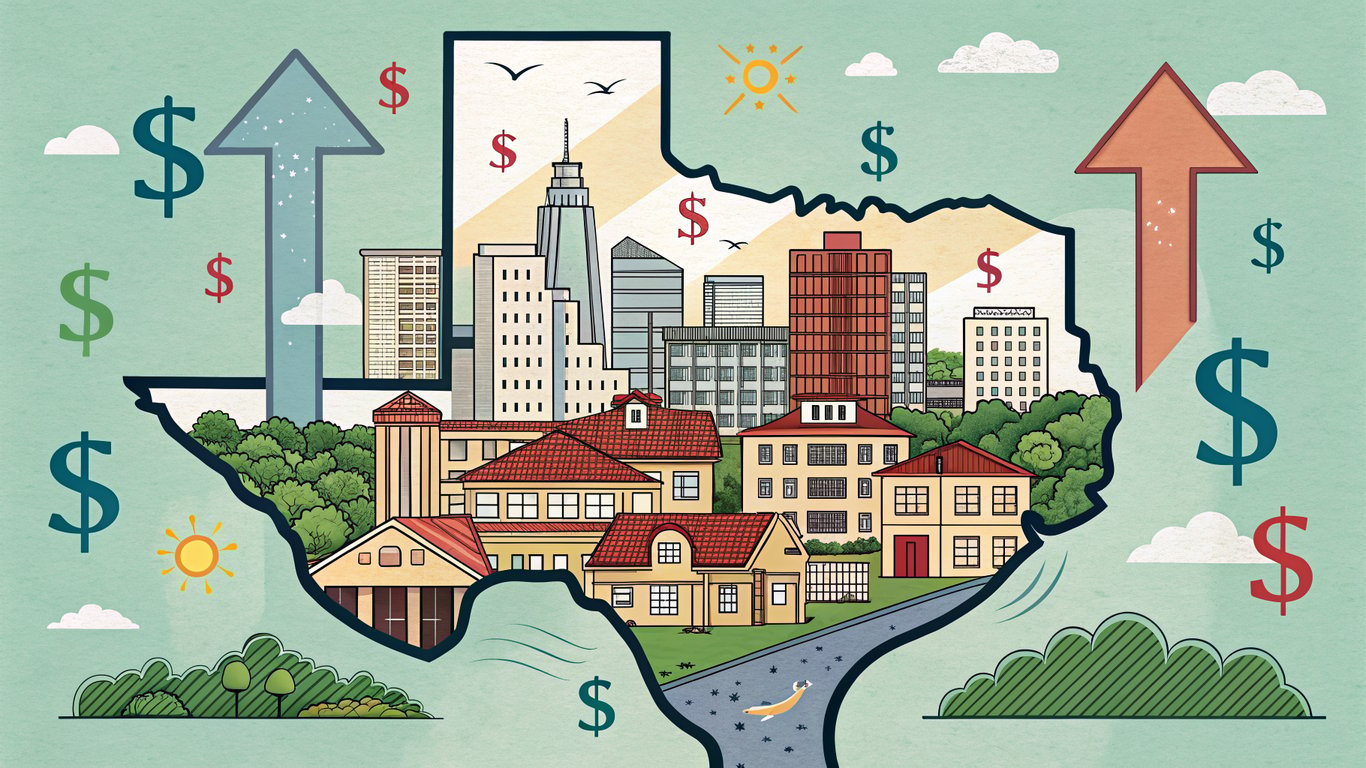
Current Texas Real Estate Market Overview (2026)
The major metros each have their own personality. Austin remains expensive but attracts tech workers with high rental budgets. Dallas-Fort Worth keeps expanding outward with new construction and corporate relocations. Houston’s energy sector creates steady demand, while San Antonio offers more affordable entry points for new investors.
Rental demand stays strong across these markets. People keep moving here for jobs, and many aren’t ready to buy immediately. That creates opportunity.
Why Investment Property Texas Makes Sense Now
The tax situation alone makes Texas attractive. Without state income tax eating into your rental profits, you keep more of what you earn. Property taxes run higher than some states, but you can factor those into your analysis upfront.
Migration patterns favor Texas. Companies relocate here, bringing employees who need housing. Remote workers choose Texas for lower costs while keeping their higher salaries. This isn’t speculation; it’s been happening consistently for years.
Types of Investment Properties in Texas
Single-family homes work well for beginners. They’re easier to finance, manage, and eventually sell. Multifamily properties (duplexes, triplexes, fourplexes) let you house hack by living in one unit while renting others. Condos and townhomes can work in urban areas, though HOA fees cut into profits.
Your choice depends on your goals. Want steady cash flow? Look at established neighborhoods with proven rental demand. Want appreciation? Consider areas with new development and job growth.
How to Analyze Real Estate Deals in Texas: A Step-by-Step Framework
Deal analysis separates successful investors from those who lose money. You need a systematic approach that accounts for all costs and realistic income projections.
The 70% Rule and Initial Deal Screening
The 70% rule helps you quickly filter deals. It says you shouldn’t pay more than 70% of a property’s after-repair value minus repair costs. So if a house will be worth $300,000 fixed up and needs $30,000 in work, your maximum offer is $180,000 (70% of $300,000 minus $30,000).
This works better for fix-and-flip than buy-and-hold, but it’s a useful starting filter. If a deal doesn’t come close to passing this test, you probably shouldn’t waste time on detailed analysis.
Calculating Net Operating Income (NOI)
NOI is your annual rental income minus operating expenses. Start with gross rental income, then subtract vacancy (typically 5-10% in Texas markets), property taxes, insurance, maintenance, property management fees, HOA dues if applicable, and utilities you cover.
Don’t include mortgage payments in NOI. That comes later. Texas property taxes deserve special attention since they run higher than many states. Check the actual tax bill, not just what the seller claims.
Cash Flow Analysis and the 1% Rule
The 1% rule suggests monthly rent should equal at least 1% of purchase price. A $200,000 property should rent for $2,000 monthly. In reality, most Texas markets don’t hit this anymore, especially in Austin or Dallas. You might see 0.7% to 0.9% in appreciating areas.
Cash flow is what’s left after all expenses including mortgage payments. Positive cash flow means the property pays for itself and puts money in your pocket. Negative cash flow means you’re subsidizing it monthly, betting on appreciation.
Return on Investment (ROI) Metrics
Cash-on-cash return divides annual cash flow by your total cash invested. If you put $50,000 down and clear $4,000 annually after all expenses, that’s an 8% cash-on-cash return. This metric matters because it shows what your actual money is earning.
Total ROI includes appreciation, loan paydown, and tax benefits. It’s harder to calculate but gives a fuller picture. Internal rate of return (IRR) accounts for the time value of money and works better for comparing different investment timelines.
Understanding and Calculating Cap Rates: The Complete Guide
Cap rate gets thrown around constantly in real estate conversations. It’s useful but often misunderstood.
What is Cap Rate and Why It Matters
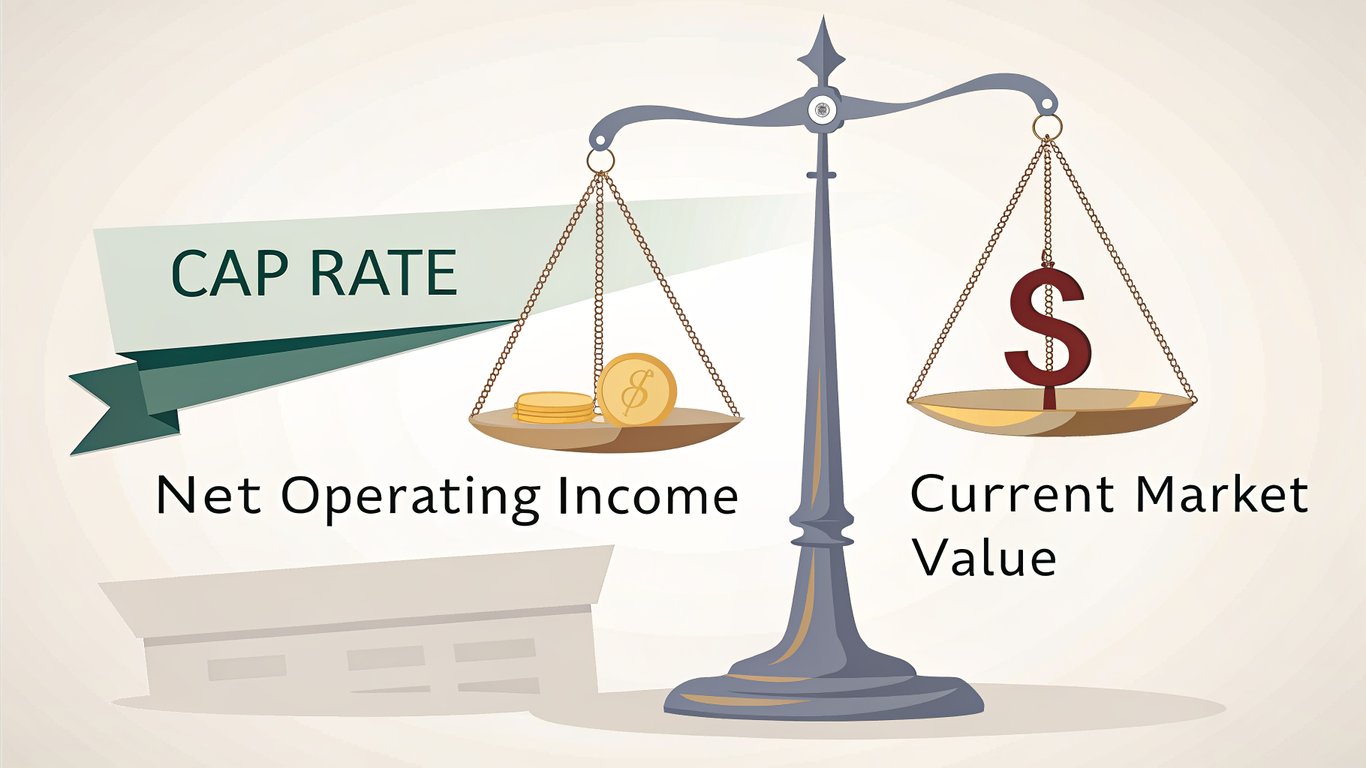
According to Truss Financial Group, cap rate is treated as a starting metric, not a shortcut. It measures the relationship between a property’s net operating income and its current market value, giving you a quick snapshot of potential returns.
Cap rate lets you compare properties across different price points and locations. A $200,000 property and a $500,000 property might have the same cap rate, meaning they generate similar returns relative to their values.
How to Calculate Cap Rate: Formula and Examples
The formula is simple: Cap Rate = Net Operating Income / Current Market Value. If a property generates $15,000 in NOI and is worth $250,000, the cap rate is 6% ($15,000 / $250,000).
Here’s a real example. You’re looking at a Dallas duplex listed at $320,000. Each unit rents for $1,400 monthly. Annual gross income is $33,600. After subtracting 8% vacancy ($2,688), property taxes ($6,400), insurance ($1,800), maintenance ($2,000), and property management ($3,024), your NOI is $17,688. Cap rate: $17,688 / $320,000 = 5.5%.
What is a Good Cap Rate in Texas Markets (2026)?
Cap rates vary significantly by market and property type. In Austin, you might see 4-5% for single-family homes in desirable areas. San Antonio and Houston often run 6-7%. Smaller Texas cities can hit 8-9%.
Lower cap rates typically mean lower risk and higher appreciation potential. Higher cap rates suggest either higher risk or less appreciation. There’s no universal “good” cap rate; it depends on your strategy and risk tolerance.
Cap Rate vs. Cash-on-Cash Return vs. IRR

Cap rate ignores financing completely. It assumes you pay cash. Cash-on-cash return accounts for your actual investment and mortgage payments. IRR factors in the timing of cash flows and eventual sale.
Use cap rate for quick comparisons. Use cash-on-cash for understanding actual returns on your money. Use IRR when planning long-term holds and eventual exits.
Limitations of Cap Rate Analysis
Cap rate doesn’t tell you about appreciation potential, financing terms, or tax benefits. Two properties with identical 6% cap rates might perform very differently if one appreciates 5% annually while the other stays flat.
It also doesn’t account for capital expenditures like roof replacements or HVAC systems. A property with deferred maintenance might show a great cap rate until you factor in upcoming major repairs.
Financing Options for Investment Property Texas: 2026 Edition
How you finance an investment property Texas purchase dramatically affects your returns. More financing options exist than most new investors realize.
Conventional Investment Property Loans
Traditional lenders typically require 20-25% down for investment properties. Interest rates run higher than owner-occupied mortgages, usually 0.5-1% more. You’ll need good credit (typically 680+), stable income, and cash reserves.
Lenders want to see that you can cover the mortgage even without rental income. They’ll count 75% of projected rent toward your qualifying income, accounting for vacancy and management.
FHA and VA Loans for House Hacking
House hacking lets you use owner-occupied financing with lower down payments. FHA loans require just 3.5% down on properties up to four units, as long as you live in one. VA loans offer 0% down for eligible veterans.
This strategy works brilliantly for first-time investors. Buy a duplex, live in one side, rent the other. Your tenant helps cover the mortgage while you build equity and learn landlording.
DSCR Loans and No-Doc Options
Debt Service Coverage Ratio (DSCR) loans qualify you based on the property’s income, not your personal income. This works great for self-employed investors or those with multiple properties. Lenders want to see a DSCR of 1.0 or higher, meaning the property generates enough rent to cover its mortgage payment.
These loans typically require 20-25% down and charge slightly higher rates than conventional financing, but they’re worth it if traditional income verification doesn’t work for your situation.
Hard Money and Private Money Lenders in Texas
Hard money works for short-term situations like fix-and-flips or bridge financing. Expect to pay 8-12% interest with 2-4 points upfront. Terms usually run 6-12 months. These lenders care more about the property’s value than your credit score.
Private money comes from individuals rather than institutions. Terms vary widely. Some investors build relationships with private lenders who fund deals at better rates than hard money but with more flexibility than banks.
Creative Financing Strategies
Seller financing happens when the property owner acts as the bank. You make payments directly to them instead of a traditional lender. This works especially well with motivated sellers in divorce or probate situations who want steady income.
Subject-to purchases involve taking over existing financing. You buy the property but leave the seller’s mortgage in place, making payments on their loan. This requires careful legal structuring but can work when sellers need to exit quickly.
Texas Landlord-Tenant Laws and Regulations: What Investors Must Know
Texas landlord laws affect your profitability and risk. Understanding them isn’t optional.
Texas Property Code: Landlord Obligations
Texas law requires landlords to maintain habitable conditions. That means working plumbing, heating, and cooling systems, structural integrity, and freedom from health hazards. You can’t rent a property with serious defects.
Repairs must happen within a reasonable timeframe. If you don’t fix issues affecting habitability, tenants can potentially repair and deduct, terminate the lease, or pursue legal remedies.
Security Deposit Rules in Texas
Texas doesn’t cap security deposits, but most landlords charge one month’s rent. You must return deposits within 30 days of move-out, along with an itemized list of any deductions. If you don’t provide this accounting, you lose the right to keep any portion of the deposit.
Normal wear and tear doesn’t justify deductions. Holes in walls, broken fixtures, or excessive cleaning do. Document everything with photos at move-in and move-out.
Eviction Process in Texas
Texas has relatively landlord-friendly eviction laws compared to states like California or New York. The process typically takes 3-4 weeks if uncontested. You must provide proper notice (usually 3 days for non-payment), file with the court, win your case, and then have the constable remove the tenant.
Never attempt self-help evictions. Changing locks, removing belongings, or shutting off utilities is illegal and exposes you to serious liability.
Local Ordinances: City-Specific Regulations
Austin has specific short-term rental regulations requiring licenses and limiting where you can operate. Dallas has rental registration requirements in certain areas. Houston and San Antonio have their own local codes.
Check local ordinances before buying. What’s legal in one Texas city might be restricted in another.
Finding and Acquiring Investment Properties in Texas
Deal sourcing separates active investors from those who never buy anything. You need multiple channels.
Where to Find Investment Properties
The MLS remains a primary source. Work with an agent who understands investment properties and can run numbers quickly. Off-market deals come from direct mail, driving for dollars, networking with other investors, and building relationships with wholesalers.
Probate sales and divorce situations often create motivated sellers. These properties sometimes sell below market because the sellers prioritize speed over maximum price. Foreclosure auctions require cash and carry more risk but can offer deals.
Working with Real Estate Agents and Investors
Find an agent who invests themselves or works primarily with investors. They’ll understand your criteria and won’t waste time showing you properties that don’t meet your numbers. Join local real estate investment associations to build your network.
Building Your Texas Real Estate Investment Business
One property is a start. A portfolio is a business.
Entity Structure: LLC vs. Personal Ownership
Many investors hold properties in LLCs for liability protection. If someone sues over a property issue, they’re suing the LLC, not you personally. Texas makes LLC formation relatively straightforward.
The downside is financing gets harder. Most lenders prefer lending to individuals. Some investors start with personal ownership and transfer to LLCs after refinancing.
Tax Benefits and Strategies for Texas Investors
Depreciation lets you deduct a portion of the property’s value each year, even though it’s probably appreciating. This creates paper losses that offset rental income. Cost segregation accelerates depreciation by identifying components that depreciate faster than the building itself.
1031 exchanges let you defer capital gains taxes by rolling proceeds from one investment property into another. This strategy works brilliantly for building wealth over time.
Scaling from One Property to a Portfolio
The BRRRR method (Buy, Rehab, Rent, Refinance, Repeat) lets you recycle capital. Buy a property below market, fix it up, rent it out, refinance based on the new higher value, pull your money out, and repeat with another property.
This strategy requires more work than simple buy-and-hold but accelerates portfolio growth significantly.
Your Action Plan for Texas Real Estate Investing Success
Real estate investing rewards action more than perfection. You’ll learn more from buying your first property than from reading another dozen books.
30-Day Action Plan for New Investors
Week one: Get pre-approved for financing and choose your target market. Week two: Analyze 10 properties using the frameworks above. Week three: Tour properties and build your team (agent, lender, inspector). Week four: Make offers on properties that meet your criteria.
Don’t expect to buy in 30 days. But you’ll build momentum and learn what works in your market.
Common Mistakes Texas Investors Make
Underestimating property taxes is huge in Texas. Always verify actual tax bills. Skipping proper inspections costs money later. Overestimating rents leads to negative cash flow. Using online rent estimates without confirming actual market rents sets you up for disappointment.
Buying in areas you don’t understand because cap rates look good on paper rarely works out. Know your market or partner with someone who does.
Resources and Tools for Texas Real Estate Investors
Online calculators from sites like Rentastic help you run numbers quickly. Local real estate investment clubs exist in every major Texas city. County appraisal district websites provide property tax information. Join investor forums to learn from others’ experiences.
The best education comes from doing. Start small, learn the process, and scale from there. Texas offers enough opportunity for investors at every level.