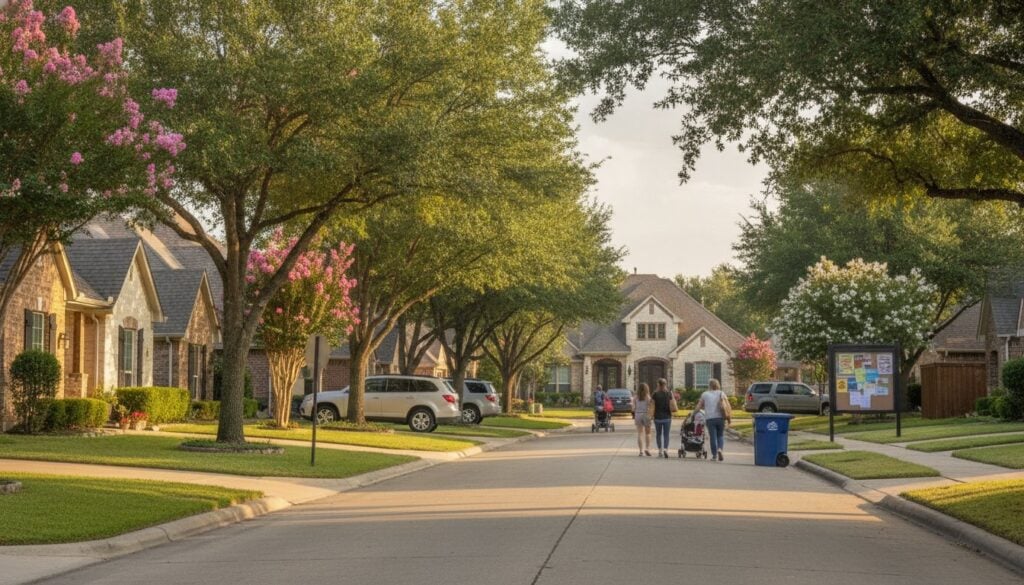
Houston’s housing market in 2026 is not the same animal it was three years ago. Sellers who priced high and waited for offers are now watching listings sit while buyers take their time. According to the Q1 2026 Texas Quarterly Housing Report from Texas REALTORS, the typical Houston home spent 99 days on the market in Q1 2026 — 66 days listed, then 33 more to close. That is five days longer than the same period a year prior. Buyers have options now. Sellers need a plan.
What “Selling Fast” Actually Means in 2026
Fast Is Relative to the Zip Code
There is no single Houston market. There are dozens of micro-markets stacked side by side, each moving at its own pace. Look at the difference in months-of-inventory across Houston zip codes right now.
| ZIP Code / Area | Months of Inventory | Median Sold Price | What It Means for Sellers |
|---|---|---|---|
| 77006 (Montrose) | 5.8 months | $2,020 | Tightest supply — priced-right homes move |
| 77095 (Copperfield) | 6.1 months | $3,500 | Balanced, but condition matters |
| 77077 (Energy Corridor) | 6.9 months | $259,000 | Buyer has leverage; price sharp |
| 77008 (Heights) | 6.5 months | $4,850 | Strong demand at the right price |
| 77018 (Garden Oaks) | 8.8 months | $413,000 | Buyers are selective; presentation critical |
| 77007 (Near Heights) | 8.3 months | $3,350 | More competition among sellers |
| 77009 (Northside) | 10.0 months | $3,100 | Buyer’s market; pricing must be aggressive |
| 77004 (Midtown/Third Ward) | 12.6 months | $2,700 | Significant oversupply; strategy is everything |
Translation: a home in 77006 and a home in 77004 are operating in completely different conditions, even though they share the same city. Six months of inventory is roughly balanced. Above that, buyers have more choices and more patience. Sellers in the 8-12 month range need a sharper strategy, not just a sign in the yard.
The Days-on-Market Trap
Days on market is the number buyers and their agents watch closely. Once a listing crosses 30 days without an offer, buyers start wondering what is wrong with it. That skepticism compounds every week. Selling fast is not just about convenience for the seller — it protects the seller’s negotiating position.
Why Some Homes Still Sell Quickly
Even in zip codes with 10 or more months of inventory, some homes sell in the first two weeks. They share a common profile: priced at or slightly below market, well-presented, and listed at the right moment. None of that happens by accident.
Pricing Is Still the First Variable
The Market Does Not Forgive Wishful Pricing
Texas REALTORS reported that Houston’s median home price fell to $325,000 in Q1 2026, down 1.5% year over year. That is a modest decline in dollar terms, but it signals something bigger: sellers can no longer count on appreciation to bail out an overpriced listing. The market has reset expectations.
Think of it as a dartboard. The bullseye is the range where serious buyers are actually shopping. Price inside that range and you get traffic. Price above it and buyers scroll past — they may not even tour the home. A price reduction later costs more in time and carrying costs than pricing right from day one.
Comparable Sales Are Your Anchor
Pricing strategy starts with comparable sales — homes that sold within the last 90 days, within roughly a half-mile, with similar square footage and condition. The Texas A&M Real Estate Research Center tracks pricing trends at the metro level, but the real data that matters to your listing is hyper-local. Your specific block, your specific school zone, your specific condition tier.
Price Brackets and Buyer Psychology
Buyers search in price brackets online. A home listed at $405,000 misses every buyer searching up to $400,000 — a large group. Pricing at $399,900 captures that entire pool. The tradeoff is a small nominal reduction. The benefit is dramatically more foot traffic in the first week, which is when the best offers typically arrive.
Presentation: The Variable Sellers Underestimate Most
First Impressions Happen Online
More than 90% of buyers start their search online, according to NAR research. That means your listing photos are the first showing. Dim rooms, cluttered counters, and wide-angle distortion do not just hurt aesthetics — they reduce the number of buyers who schedule a tour in the first place. Bright homes do. Professionally photographed homes get more clicks, more showings, and statistically sell faster.
What to Fix and What to Skip
Not every repair is worth doing before listing. The goal is to eliminate the objections that cause buyers to write low offers or walk away entirely. Focus on:
- Fresh interior paint in neutral tones (one of the highest-return pre-sale investments)
- Landscaping cleanup and front-door curb appeal
- Deep cleaning, including grout, appliances, and windows
- Deferred maintenance items visible during a showing (dripping faucets, sticking doors, burned-out bulbs)
- Any safety or structural items that will surface during inspection anyway
Skip cosmetic upgrades that reflect personal taste. A new backsplash in a tile the seller loves may not match what the buyer wants. If you want to consider a more targeted renovation approach before listing, the renovate-and-sell path can help you identify where dollars convert to value most efficiently in the Houston market.
Staging: Even Partial Staging Moves the Needle
An empty house feels smaller than it is and echoes in ways that feel off to buyers. Staged homes — even partially staged with furniture in living areas and master bedroom — typically sell faster and closer to list price than vacant homes. That is not opinion. NAR’s staging data consistently shows that staged listings spend fewer days on market than unstaged equivalents.
Timing the Market (and the Listing)
Spring and Early Fall Move the Most Homes
Houston’s buying season tracks school enrollment cycles. Families make decisions between March and June so they can close and settle before the fall semester. That window is historically Houston’s most active. Listing in late January or early February means you hit the market as that demand builds. Listing in August, after school starts, means you are competing for a smaller buyer pool.
Day of Week and Time of Day Matter Too
Listings that go live on Thursday tend to generate showings over the weekend — the highest-traffic days for real estate. A Friday or Monday launch splits that momentum. It is a small detail, but in a market where the first seven days are the most important, launch timing matters.
Interest Rate Context for 2026
The national 30-year fixed mortgage rate stands at 6.3% as of April 30, 2026, according to Freddie Mac’s Primary Mortgage Market Survey. That is meaningfully higher than the historic lows buyers experienced in 2020-2021, and it affects what buyers can afford. A seller pricing at $400,000 needs to understand that at 6.3%, a buyer putting 10% down carries a principal and interest payment of roughly $2,270 per month. That affordability ceiling shapes what buyers will offer. Ignoring it leads to pricing that stalls.
The Buyer Pool Has Changed — and That Changes Everything
First-Time Buyers Are at a Record Low
According to NAR’s 2026 Home Buyers and Sellers Generational Trends report, just 21% of all home purchases were made by first-time buyers — an all-time low in NAR’s records. That is down from 24% the prior year. The primary reason: affordability strain from rates and prices has pushed younger buyers to the sidelines. Baby boomers, by contrast, made up 42% of all purchases. That demographic shift matters for sellers because move-up and downsizing buyers have different priorities than first-timers.
What Today’s Buyers Prioritize
The buyer pool today skews toward people who already own homes and have equity to deploy. They are less sensitive to price at the margins, but they are highly sensitive to condition and value. They have seen overpriced, under-maintained homes. They walk away quickly. Experienced buyers want a home that is ready to live in, not a project.
Saving for a Down Payment Takes Time
NAR analysis published in April 2026 found that Houston buyers typically need five years to save a down payment — roughly $64,410 on a median-priced home of $380,560, assuming a 17% down payment. That means the buyers who are ready to close today started saving around 2021. They are financially prepared, but they are also deliberate. They will not overpay just because a seller is motivated. You are not alone in finding this market harder to read than prior cycles — thousands of Houston sellers are working through the same recalibration right now.
What Sellers in Slower Zip Codes Must Do Differently
Concessions Are Back on the Table
In markets with more than eight months of supply — 77018, 77009, 77007, and 77004 fit that description right now — buyers are negotiating concessions. Seller-paid closing costs, rate buydowns, and repair credits are all common again. That is exactly why sellers in those zip codes need to build strategy around net proceeds, not gross list price. A home listed at $425,000 with $10,000 in concessions nets less than a home priced at $415,000 with no concessions — but both outcomes can reach the same closing table.
Exposure and Agent Network Quality
In a slower market, your listing’s reach matters more. HAR MLS distribution, syndication to Zillow and Realtor.com, and active outreach to buyer’s agents in the area are not optional extras — they are baseline requirements. A listing that is technically on the market but poorly promoted sits. Agents who work the Houston market daily know which buyer pools are active in which price ranges. That network accelerates showings.
Cash Offers as a Reset Option
Some sellers in high-inventory zip codes decide that the traditional listing process is not worth the time and uncertainty. A cash offer removes the financing contingency, eliminates the appraisal risk, and closes on a predictable timeline. The tradeoff is usually a discount to market value. But for a seller facing carrying costs, a difficult property condition, or a time-sensitive relocation, that tradeoff often makes sense. You can explore what a cash offer looks like for your Houston home without committing to anything.
The Houston-Specific Advantage Sellers Often Miss
No State Income Tax Attracts Relocating Buyers
Texas has no state income tax. That is a real and quantifiable financial benefit for buyers relocating from California, Illinois, New York, or other high-tax states. Houston sellers marketing to relocation buyers — including those moving for energy sector, medical center, or port-related employment — should make sure their listing language speaks to lifestyle and financial advantages, not just square footage.
Proximity to Employment Corridors Adds Value
Houston’s job base spans the Texas Medical Center, the Energy Corridor, the Port of Houston, and multiple suburban employment nodes in Katy, Sugar Land, and The Woodlands. A home’s commute story is part of its value story. Sellers near major employment corridors have a built-in advantage that pricing and marketing should reflect. If your home is in the 77077 Energy Corridor zip code, for example, that proximity is a selling point worth calling out explicitly — even as that zip code currently carries 6.9 months of inventory.
Working With a Pricing Strategy Advisor
The Pricing Strategy Advisor (PSA) designation, recognized by the National Association of REALTORS, indicates that an agent has completed specialized training in pricing methodology — comparative market analysis, absorption rates, and price positioning relative to competing inventory. In a market where pricing error is the most common reason homes stall, working with an advisor trained in this area is a meaningful differentiator. If you want to talk through your specific situation, scheduling a call is a straightforward place to start.
Building Your Selling Strategy Step by Step
Selling fast in any market is not luck. It is a sequence of decisions made before the sign goes in the yard. Here is a practical order of operations:
- Get a current market analysis — not an automated estimate, but a real comparison to recent sales in your zip code with condition and feature adjustments.
- Identify your net proceeds target — know what you need to walk away with, accounting for commission, concessions, and closing costs.
- Complete high-return pre-sale repairs — focus on deferred maintenance and curb appeal, not cosmetic preferences.
- Stage and photograph professionally — this is the single most impactful presentation investment for most sellers.
- Set list price within the buyer search bracket — use round-number psychology to your advantage.
- Launch on a Thursday — maximize first-weekend showing traffic.
- Review offers with net proceeds in mind — a cash offer below list may net more than a financed offer with concessions and appraisal risk.
- Move quickly on offers that meet your criteria — letting a solid offer sit while waiting for something better often costs more than it gains.
If you want to understand all your options before deciding on the traditional listing route, the offer process page walks through what different selling paths look like from start to finish.
Frequently Asked Questions
Q: How long does it typically take to sell a home in Houston right now?
A: According to the Q1 2026 Texas Quarterly Housing Report from Texas REALTORS, the typical Houston home spent 99 days on market in Q1 2026 — 66 days listed plus 33 days to close. That is up five days from the same period in 2025. Results vary significantly by zip code and price range.
Q: Does pricing below market value help a home sell faster?
A: Pricing slightly below the top of market typically generates more showings and competing interest in the first week, which is the most critical window. A home priced at the very top of its range tends to sit longer and often sells for less after a price reduction than if it had been priced sharper from the start. The goal is to price within the buyer’s active search bracket, not necessarily at a steep discount.
Q: What is a cash offer and when does it make sense for a Houston seller?
A: A cash offer is one where the buyer does not need mortgage financing. It removes the appraisal contingency and financing contingency from the contract, which reduces the ways a deal can fall apart. Cash offers typically close faster — sometimes in 10-14 days. They usually come in below full retail value, so the tradeoff is speed and certainty versus maximum net proceeds. For sellers with time pressure or difficult property conditions, cash offers are worth evaluating seriously. You can learn more about quick cash offers here.
Q: Do I need to make repairs before listing my Houston home?
A: Not always, but deferred maintenance items that will surface during a buyer’s inspection are usually better addressed before listing. Buyers who discover problems during inspection negotiate harder or walk away. Sellers who disclose and address known issues upfront typically have cleaner contract-to-close experiences. High-return preparation items include fresh paint, landscaping, and deep cleaning. Major renovations rarely return dollar-for-dollar in a sale. If you are considering a more involved approach, the renovate-and-sell path may be worth exploring.
Q: What does months-of-inventory mean and why does it matter?
A: Months of inventory measures how long it would take to sell all active listings at the current pace of sales, assuming no new listings enter the market. Below six months generally favors sellers. Above six months generally favors buyers. Some Houston zip codes currently sit at 10-12 months of inventory, which means buyers have more choices and more negotiating power. Sellers in those areas need sharper pricing and stronger presentation to stand out.
About Allen Markel — Allen has been a licensed Texas REALTOR for 17 years following 28 years as a software engineer and database architect in Houston. He is a Certified Negotiation Expert (CNE) and Pricing Strategy Advisor (PSA), and serves Greater Houston buyers and sellers with a data-driven, technical approach to real estate. Reach Allen at allen@allenmarkel.com or 832-709-2540, or schedule a call at https://allenmarkel.com/schedule-call/.
The choice of when to list, how to price, and which offer to accept depends entirely on your timeline, your financial goals, and the specific conditions in your zip code. Pick the path that moves you forward with the least risk and the most clarity — and get hyper-local data before making any of those decisions.