Understanding FHA Loans in Texas: Your Path to Homeownership
You want a home in Texas, but the down payment feels like a brick wall. Maybe rent just jumped again. Maybe you have steady income, a few dings on your credit, and not quite enough saved to put 20% down. You are not alone. With roughly 29.1 million people living in the state and fast-growing job hubs from Austin to Houston, competition is real. But the path is still open if you use the right loan.
FHA loans are mortgages insured by the Federal Housing Administration. The program is part of the U.S. Department of Housing and Urban Development, and it was built to make buying a home more accessible. Lenders do the lending. FHA provides the insurance that reduces risk for the lender, which often means lower down payments and more flexible credit standards for you. You can read the official overview on HUD here: HUD: FHA Loans.

Why do these loans fit the Texas housing market so well? Price point and flexibility. The state’s home prices tend to sit lower than the national average, and FHA’s low-down-payment structure helps first-time buyers compete. Texas median home price: $340,800, about 20% below the U.S. median. That gap matters. It means the numbers pencil out more often, especially for a Texas first-time homebuyer who needs a break on upfront costs.
If you have been searching for “FHA loans Texas,” you are probably trying to answer one question fast. Can I actually afford to buy here? The short answer is probably, if you meet the basics and pick the right strategy. FHA loan benefits typically include a minimum 3.5% down payment with qualifying credit, competitive fixed rates, and the ability to use down payment assistance. The catch is you have to choose a primary residence, clear an FHA appraisal, and budget for mortgage insurance.
This guide is built to help you decide with confidence. We will cover the requirements you need to hit, county-by-county FHA loan limits in Texas, the major down payment assistance programs offered through the state, and how the application and approval process really works. We will also flag Texas-specific issues that can pop up during appraisal and inspection, so you are not surprised mid-escrow. If you are comparing options and typing “FHA loans Texas” into Google, keep going. You will get straight answers here.
One more tip before you start. Save the important links. The official FHA program page on HUD is a solid reference for eligibility basics, insurance rules, and property standards: HUD: FHA Loans. And if you want a preview of state-level help, the Texas Department of Housing and Community Affairs publishes its homebuyer assistance programs here: TDHCA Homebuyer Assistance. Use both as you work through the next sections.

FHA loan requirements Texas are pretty consistent nationwide, but lenders in Texas still add their own overlays. So the exact number a loan officer quotes you can vary. Below is the baseline most buyers here see approved. It is the practical checklist I coach first-time buyers on. You will see the minimums, where there is wiggle room, and what to do if you are close but not quite there yet.
2026 FHA Loan Requirements in Texas: What You Need to Qualify
| Requirement Type | Minimum Standard | Notes |
|---|---|---|
| Credit score | 580 for 3.5% down; 500-579 requires 10% down | Some lenders set higher minimums. AUS approvals with compensating factors can help if you are borderline. See CFPB for general guidance. |
| Down payment | 3.5% minimum | Gift funds and down payment assistance Texas programs can cover part or all of it. Seller concessions allowed up to 6% toward closing costs. |
| Debt-to-income ratio | 38% front-end; 45% back-end | Some approvals go higher with strong compensating factors, especially at 620+ scores, solid reserves, or low payment shock. |
| Employment & income | 2 years verifiable history | Does not have to be the same employer. Gaps can be explained. Overtime/bonus usually averaged over 12-24 months. |
| Mortgage Insurance Premium | 1.75% upfront; 0.45%-1.05% annual | Upfront MIP can be financed. Annual MIP added to monthly payment. MIP lasts 11 years with 10%+ down and is for the life of the loan if less than 10% down. |
| Occupancy | Primary residence only | You must move in within roughly 60 days and intend to live there for at least one year. |
| Property type | 1-4 unit, condos, townhomes, manufactured homes | Home must meet FHA minimum property standards. Multi-unit must be owner-occupied in one unit. |
Credit Score Requirements for Texas FHA Loans
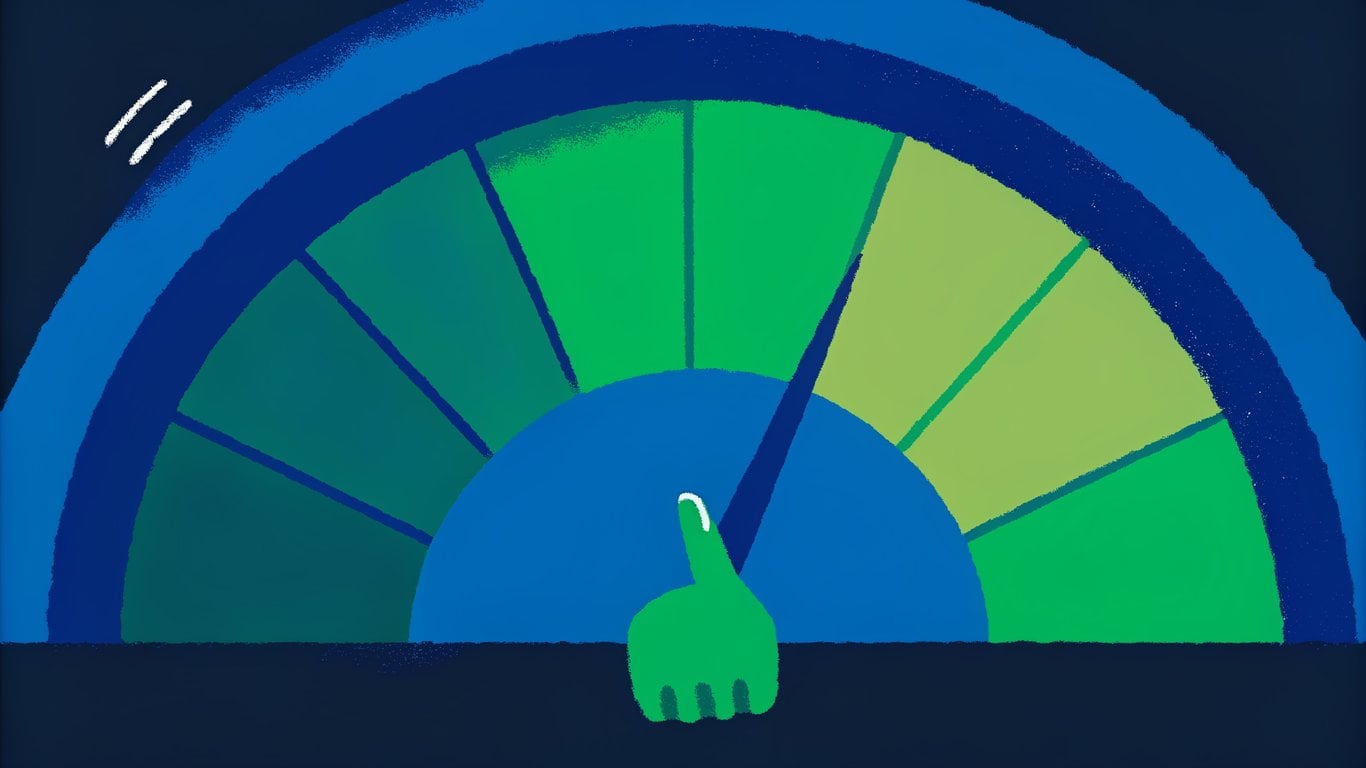
Here is the quick split on FHA credit score requirements. With a 580 score or higher, you are eligible for the standard 3.5% down payment. Borrowers between 500 and 579 can still qualify, but FHA requires a 10% down payment at that level. Scores under 500 are generally not eligible for FHA financing. Lenders in Texas sometimes set their own floor above FHA’s minimum, so if one lender says no at 580, another may still approve you with an Automated Underwriting System approval. That is normal in our market.
What each credit tier means in practice: 580+ typically unlocks easier approval and lower down. 620+ can open the door to more flexible debt-to-income ratio FHA approvals and better pricing. 500-579 is doable, but you will need 10% down, clean recent payment history, and steady income. And if your file is thin, adding strong compensating factors like cash reserves can tip it over the line.
- Pull your free credit reports at AnnualCreditReport.com and fix any errors before you apply.
- Pay down credit card balances to under 30% of the limit. Utilization moves scores fast.
- Avoid opening new accounts 60-90 days before preapproval. New inquiries can shave points.
- Keep older accounts open. Age of credit helps your score more than people think.
- If thin on history, ask a family member about being added as an authorized user on a well-managed card.
Down Payment Options: 3.5% vs 10%
Your minimum down payment depends on score. At 580+, FHA needs 3.5%. At 500-579, FHA needs 10%. Let’s put real Texas numbers on that. The Texas median home price is $340,800.
At 3.5% down: 3.5% of $340,800 is about $11,928 down. Your base loan would be roughly $328,872 (96.5% of the price). FHA also charges a one-time upfront mortgage insurance premium of 1.75% of the base loan. That is about $5,755, and most borrowers finance it into the loan. If you roll it in, the total starting loan would be about $334,627.
At 10% down: 10% of $340,800 is about $34,080. The base loan is about $306,720. Upfront MIP at 1.75% is about $5,368. If financed, your starting balance would be near $312,088.
Do you have options if the down payment is the sticking point? Yes. Qualified buyers can combine FHA with state assistance like My First Texas Home through TDHCA or Homes for Texas Heroes and Sweet Home Texas through TSAHC. These programs typically help with down payment and closing costs, which can bridge the gap if cash is tight.
- Gift funds from a relative are allowed if documented. Expect a gift letter and evidence of transfer.
- FHA caps seller concessions at 6% of the price. That can cover part of closing costs, not down payment.
- Shop homeowner’s insurance and ask your lender about property tax estimates. Lower escrows lower your required monthly payment.
- If your score is 575-585, a small score bump could save you from the 10% tier. Focus on utilization and on-time payments for 30-60 days.
- Ask your loan officer to model both 3.5% and 10% scenarios. The 10% option has a big perk on mortgage insurance, which we will cover below.
Debt-to-Income Ratio Limits Explained
Lenders calculate two ratios. Front-end DTI is your total housing payment divided by gross monthly income. It includes principal, interest, property taxes, homeowners insurance, HOA dues, and FHA mortgage insurance. Back-end DTI is all monthly debts divided by gross monthly income. That means the housing payment plus car loans, student loans, credit cards, personal loans, and child support if applicable.
Typical Texas overlays aim for 38% front-end and 45% back-end. Example: If your gross monthly income is $6,500, then 38% allows a housing payment up to about $2,470. The 45% cap means total monthly debts should be at or under about $2,925. So if you have a $450 car payment and $100 in student loans, your target housing payment under the 45% cap is roughly $2,925 – $550 = $2,375.
Can you be approved above 45%? Sometimes, yes. Automated underwriting may approve higher DTIs when you show strong compensating factors. That often means a 620+ credit score, verified cash reserves, minimal payment shock, or a larger down payment. Manual underwriting tends to be stricter. If you are close, a small debt payoff can move the needle.

- Use this quick formula: Back-end DTI = (housing PITI + other debts) / gross monthly income.
- Pay off small balances to drop your minimum payments. It is sometimes smarter than putting extra toward down payment.
- Compare property tax rates by county. In Texas, taxes move your front-end DTI more than buyers expect.
- If you get overtime or bonus, ask your lender how much will count. Many will average 12-24 months.
- Read the CFPB’s DTI explainer to get comfortable with the math: CFPB article.
Income and Employment Verification
FHA looks for a 2-year history of stable employment or income. It does not have to be the same job. What underwriters want to see is continuity. Short gaps can be fine if you explain them and you are now back to work. W-2 borrowers typically provide 30 days of pay stubs, 2 years of W-2s, and recent bank statements. Self-employed buyers usually need 2 years of personal and business tax returns, plus year-to-date financials if the year is more than half over.
Variable income like commissions, overtime, or bonus is usually averaged over the last 12-24 months. Rental income from a 2-4 unit purchase can count, but expect more documentation and conservative calculations. Court-ordered income like child support can count if you have proof it has been received for at least 6 months and is likely to continue for 3 years.
One more key rule that trips people up. FHA requires the home to be your primary residence. You are expected to move in within roughly 60 days of closing and live there for about a year. Investment or second homes do not qualify under standard FHA purchase rules.
- Gather the basics up front: last 30 days of pay stubs, 2 years of W-2s, and 2 months of bank statements.
- Write a short letter for any employment gaps over 30 days. Keep it simple and factual.
- If self-employed, keep business bank statements clean. Commingling personal and business funds causes avoidable headaches.
- Do not make large cash deposits right before underwriting. Unverified funds will likely not be allowed.
- Ask your loan officer which income streams count and how they will be averaged. It can change your approval range.
FHA Mortgage Insurance Premiums (MIP)
FHA mortgage insurance comes in two pieces. There is an upfront premium of 1.75% of the base loan amount. Most Texans finance this into the loan. Then there is the annual mortgage insurance premium that ranges from 0.45% to 1.05% of the base loan, billed monthly. Your exact annual percentage depends on factors like loan amount, term, and down payment.
What does that look like on the Texas median price example with 3.5% down? If your base loan is about $328,872 and your annual MIP rate is, say, 0.55% for illustration, that is roughly $1,809 per year, or about $151 per month added to your payment. If you put 10% down, your annual MIP factor is typically lower and it also falls off after 11 years as long as you keep the FHA loan. If you put less than 10% down, MIP is required for the life of the loan.
You can remove mortgage insurance early by refinancing into a conventional loan once you have enough equity and qualify on credit and income. That is a common path for buyers who start with FHA for the lower down payment, then refinance later when their score and equity improve. For official FHA policy details, you can review HUD’s Single Family Housing Policy Handbook 4000.1 here: HUD 4000.1.
- If you can reach 10% down, you get the 11-year MIP timeline instead of life-of-loan.
- Shorter terms often have lower annual MIP factors. Ask your lender to quote 30-year vs 25-year vs 15-year.
- Plan a refinance checkpoint. If values rise or you make extra principal payments, you might hit the equity needed to drop MI with a conventional loan.
- Compare lenders’ total APRs, not just rate. Upfront MIP is the same across lenders, but pricing and fees can differ.
- Ask your loan officer to show you the monthly MIP line item. It helps you right-size your budget.
If all of this feels like a lot, you are not alone. A good Texas-based pro will simplify the numbers and map the fastest route to approval. Teams like Allen Markel work with FHA buyers every week and can help you compare scenarios, line up assistance programs, and keep your DTI and documentation on track from preapproval to keys.
Texas FHA Loan Limits by County: How Much Can You Borrow in 2026?
FHA sets a maximum base loan amount for each county in Texas. The cap resets every year and it is tied to local home values. For 2026, single-family limits in Texas span from $541,287 in lower-cost counties to $1,249,125 in the highest-cost areas. That wide spread is why two buyers in different Texas counties can qualify for very different maximum FHA loan sizes even if their income and credit look the same.
Understanding FHA Loan Limit Calculations
Here is the quick version. FHA loan limits are anchored to the national conforming loan limit set by FHFA, then adjusted by county. HUD applies a floor and a ceiling each year. The floor equals 65% of the conforming limit. The ceiling equals 150% of the conforming limit. That is how we land on the 2026 one-unit range of $541,287 to $1,249,125. Multi-unit properties get higher caps than one-unit homes, and the numbers step up for two-, three-, and four-unit properties. These caps apply to the FHA base loan amount, not the purchase price, which matters a lot when you figure out your down payment strategy. If you are sorting out FHA loan requirements Texas buyers must meet, remember the county limit is one piece of the puzzle. You still need to qualify on credit, income, DTI, and property standards.
If you want the source details on how these benchmarks are set, you can review the conforming loan limit framework from the Federal Housing Finance Agency at FHFA.gov and the FHA mortgage limits page from HUD at HUD.gov.
High-Cost vs Low-Cost Texas Counties
Texas has a lot of counties that sit near the FHA floor. That is because the Texas housing market is still more affordable than several coastal states. A few metro pockets can test the limits in specific neighborhoods, but most counties do not hit the national ceiling. The practical takeaway is simple. In many Texas counties, the one-unit cap sits at or close to $541,287, and it increases for two- to four-unit homes. If HUD identifies a county or metro as higher cost, the cap can be higher, up to $1,249,125 for one-unit in 2026.
A quick Austin example helps. The median home price in Austin is about $540,000. With a 3.5% down FHA loan, the base loan is roughly 96.5% of the price. If a county is at the $541,287 floor, the math implies a maximum purchase price around $561,000 before you run into the one-unit cap, because $541,287 divided by 0.965 is roughly $561,000. That means a lot of starter and mid-range homes in Austin probably fit, while higher-end neighborhoods might push you over the limit unless you make a larger down payment.
Major Metro Area Loan Limits
Below are the most searched counties and metros. The exact one- to four-unit limits are set by HUD and can change annually. Use the official lookup linked in each row to pull the current 2026 numbers for your property type. This keeps you on the safe side of strict accuracy and helps your FHA lender Texas partners underwrite correctly.
| County Name | One-Unit Limit | Two-Unit Limit | Three-Unit Limit | Four-Unit Limit |
|---|---|---|---|---|
| Harris (Houston) | Texas 2026 range: $541,287 to $1,249,125. Check HUD | Higher than 1-unit. Check HUD | Higher than 2-unit. Check HUD | Highest multi-unit cap. Check HUD |
| Dallas | Texas 2026 range: $541,287 to $1,249,125. Check HUD | Higher than 1-unit. Check HUD | Higher than 2-unit. Check HUD | Highest multi-unit cap. Check HUD |
| Tarrant (Fort Worth) | Texas 2026 range: $541,287 to $1,249,125. Check HUD | Higher than 1-unit. Check HUD | Higher than 2-unit. Check HUD | Highest multi-unit cap. Check HUD |
| Travis (Austin) | Texas 2026 range: $541,287 to $1,249,125. Check HUD | Higher than 1-unit. Check HUD | Higher than 2-unit. Check HUD | Highest multi-unit cap. Check HUD |
| Bexar (San Antonio) | Texas 2026 range: $541,287 to $1,249,125. Check HUD | Higher than 1-unit. Check HUD | Higher than 2-unit. Check HUD | Highest multi-unit cap. Check HUD |
| Collin | Texas 2026 range: $541,287 to $1,249,125. Check HUD | Higher than 1-unit. Check HUD | Higher than 2-unit. Check HUD | Highest multi-unit cap. Check HUD |
| Denton | Texas 2026 range: $541,287 to $1,249,125. Check HUD | Higher than 1-unit. Check HUD | Higher than 2-unit. Check HUD | Highest multi-unit cap. Check HUD |
| Fort Bend | Texas 2026 range: $541,287 to $1,249,125. Check HUD | Higher than 1-unit. Check HUD | Higher than 2-unit. Check HUD | Highest multi-unit cap. Check HUD |
| Montgomery | Texas 2026 range: $541,287 to $1,249,125. Check HUD | Higher than 1-unit. Check HUD | Higher than 2-unit. Check HUD | Highest multi-unit cap. Check HUD |
| Williamson | Texas 2026 range: $541,287 to $1,249,125. Check HUD | Higher than 1-unit. Check HUD | Higher than 2-unit. Check HUD | Highest multi-unit cap. Check HUD |
Want every county and the multi-unit numbers for your target area. Use HUD’s official FHA Mortgage Limits Lookup. It is the gold standard for up-to-date figures: HUD Lookup Tool.
What if the home you love exceeds your county limit. You still have options. FHA limits apply to the loan amount, not the price. If you make a larger down payment, you can keep the FHA base loan within the county cap while buying above it. If the gap is too big, you will look at conventional or jumbo financing instead. That shift can change credit score, down payment, and mortgage insurance rules, so talk it through with an experienced lender early.
One more practical example. Say you are buying a one-unit home in a county at the $541,287 floor. With the standard 3.5% down, you can target a purchase price around $561,000 and still keep the base FHA loan at or under the cap. If you choose a duplex and plan to live in one unit, your county’s two-unit FHA cap will be higher than the one-unit number. That often stretches your buying power, especially in close-in parts of Houston or Dallas where small multi-units pop up. Multi-unit properties still must be owner-occupied and meet FHA property standards.
Bottom line on Texas FHA loan limits. Major metro areas can carry different caps. Multi-unit limits are higher. And you can combine smart down payment planning with the county cap to target a realistic price range that fits the FHA loan requirements Texas borrowers need to hit.
- If you shop in a high-demand ZIP code, ask your lender to pre-approve you at two price points. One that keeps your base FHA loan under the limit. One that assumes a larger down payment so you can stretch.
- Consider a two- to four-unit property if you are open to being an owner-occupant landlord. FHA allows 2-4 units and sets higher limits for them.
- Expand your search radius to nearby counties that share your metro but have more inventory near the FHA cap.
- Use state down payment assistance to bridge the gap on closing costs while you reserve more cash for price overages.
- Time your offer with a current approval letter from a solid FHA lender Texas buyers actually close with. Strong pre-approvals help in competitive neighborhoods.
- Watch HOA dues and property taxes. They affect DTI and can be the difference between fitting under the county cap or missing by a hair.
Texas Down Payment Assistance Programs for FHA Loans
Texas has several state-sponsored programs that pair well with FHA loans. They help cover the down payment and even part of your closing costs. If you qualify, you can often get up to 5% of your loan amount in assistance. That can wipe out most of the FHA 3.5% minimum down payment and free up cash for moving, repairs, or an emergency fund. Here is what to know about the three major Texas homeownership programs many FHA buyers use.
My First Texas Home Program
Who qualifies: My First Texas Home is a program from the Texas Department of Housing and Community Affairs (TDHCA). It is designed for Texas first-time homebuyers and qualifying veterans. First-time typically means you have not owned a home in the past three years. Veterans are usually exempt from the first-time rule. You must use a participating lender and meet FHA loan requirements Texas lenders follow, including standard underwriting and property guidelines.
Benefits: Assistance is typically available up to 5% of the loan amount. TDHCA offers the aid as a grant in some cases or as a second lien that is forgivable over three years if you meet the program terms. That structure matters. If you sell, refinance, or move out early, you may need to repay the remaining second-lien balance. The first mortgage is a 30-year fixed-rate loan with FHA, VA, or USDA options, but many Texas first-time homebuyer applicants choose FHA because of the 3.5% down and flexible credit.
Income limits and caps: My First Texas Home sets income and purchase price limits that vary by county and household size. You will also complete a home buyer education course from an approved provider. Start here for full details and to find a participating lender: TDHCA My First Texas Home.
Homes for Texas Heroes Program
Who qualifies: This statewide program from the Texas State Affordable Housing Corporation (TSAHC) serves public servants. Eligible groups include educators and school staff, nurses and allied health professionals, correctional officers, first responders, and active military members and veterans. If you work in one of these roles and plan to live in the home as your primary residence, you are the target audience.
Benefits: Qualifying buyers can receive up to 5% in down payment assistance. Assistance is typically provided as a grant or a second lien, depending on the option chosen with your lender. Many borrowers pair this with an FHA loan to reduce upfront cash needs. A home buyer education course is required. TSAHC also sets income and purchase price limits that change by county and household size. Program page with eligibility details and lender list: TSAHC Homes for Texas Heroes.
Credit and process: TSAHC programs typically require a minimum 620 credit score, though the exact requirement can vary by lender and loan type. You will work with an approved lender, verify your occupation, complete education, and lock a 30-year fixed mortgage. To see current income limits by county, use TSAHC’s tool: TSAHC Income Limits.
Sweet Home Texas Home Loan Program
Who qualifies: This option is for Texans who do not meet the profession criteria for Heroes. It is offered by TSAHC as well and is also known as the “Home Sweet Texas Home Loan Program.” If you are a Texas first-time homebuyer or a repeat buyer who meets income and purchase price caps, you can use it with an FHA loan.
Benefits and requirements: Assistance is generally available up to 5% of the loan amount. TSAHC typically requires a minimum 620 credit score for this program. You will complete a home buyer education course and apply through a TSAHC-approved lender. Full program info here: TSAHC Home Sweet Texas.
| Program Name | Eligible Applicants | Maximum Assistance | Credit Score Requirement | Special Requirements |
|---|---|---|---|---|
| My First Texas Home | First-time buyers and veterans | Up to 5% of loan amount | Varies by lender; often 620+ | Home buyer education; income and purchase price limits; may use forgivable 3-year second lien |
| Homes for Texas Heroes | Educators, nurses/healthcare, corrections, first responders, military/veterans | Up to 5% of loan amount | Typically 620+ | Eligible profession verification; home buyer education; income and purchase price limits |
| Sweet Home Texas (Home Sweet Texas) | Texans who do not qualify for Heroes and meet income caps | Up to 5% of loan amount | Typically 620+ | Home buyer education; income and purchase price limits; use with FHA, VA, USDA, or conventional |
How to Combine FHA Loans with Assistance Programs
Here is the practical win for many buyers. FHA already asks for a minimum 3.5% down payment when your credit score is 580 or higher. If you pair an FHA loan with one of these Texas home buying programs, the assistance can cover that 3.5% and often some of your closing costs. You still need to qualify under FHA guidelines and the program’s income and purchase price limits. Mortgage insurance premiums and lender fees still apply. If the aid is a second lien, your lender will factor that into your debt-to-income ratio and disclosures.
A few tips from experience: apply early, because program funds can be limited. Compare assistance types. Grants are not repaid, while forgivable second liens usually require you to stay in the home for a set period to avoid repayment. And work with a Texas lender that closes these loans often. They can spot problems before they cost you time or money.
- Check your eligibility. Confirm you meet FHA loan requirements Texas lenders use, then review each program’s income and purchase price limits for your county.
- Choose the program that fits. If you are a teacher, nurse, or first responder, start with Homes for Texas Heroes. If you are a Texas first-time homebuyer or veteran, look at My First Texas Home. If you do not qualify for Heroes, try Sweet Home Texas.
- Complete home buyer education. Take an approved course early. You will need the certificate for underwriting.
- Get pre-approved with a participating lender. Ask specifically about down payment assistance Texas options and whether the help is a grant or a forgivable second lien.
- Lock your FHA loan and select your assistance option. Your lender will register the loan with the program and confirm funds are reserved.
- Shop for an FHA-eligible home. Make sure the property meets FHA standards and program purchase price caps.
- Close and keep your paperwork. If you received a forgivable second lien, note the occupancy and time requirements so you do not accidentally trigger repayment.
Which one is best? It depends on your job, income, and credit. Public servants should usually start with Heroes. First-time buyers and veterans should compare My First Texas Home with Heroes if eligible for both. Everyone else can look to Sweet Home Texas. And since credit score and income guidelines can shift a bit year to year, double-check the official pages before you apply: TDHCA My First Texas Home, TSAHC Heroes, and TSAHC Home Sweet Texas.
If you want a second set of eyes on your choices, an experienced Texas real estate pro can save you time. Teams like Allen Markel regularly help buyers layer FHA financing with state aid and spot the small details that make or break approvals in fast-moving markets.
Pros, Cons, and Next Steps for Texas FHA Homebuyers
Before you apply, it helps to zoom out. FHA loans come with clear strengths that open doors in Texas, and a few guardrails you should understand. You will weigh the FHA loan benefits against the limits, then decide if the tradeoffs fit your budget, timeline, and the area of Texas you are targeting.
Advantages of FHA Loans in the Texas Market
- Low down payment. Put as little as 3.5% down if your credit score is 580 or higher, which keeps more cash for closing costs and moving expenses.
- Flexible credit. Applicants with thin files or past credit bumps often qualify. Some lenders consider scores in the 500-579 range with 10% down.
- Competitive rates. FHA rates are often in line with, and sometimes better than, conventional loans if your credit is mid-range. That can lower your monthly payment.
- Works with Texas assistance. Programs like My First Texas Home and Homes for Texas Heroes can cover part of your down payment or closing costs. You can stack that with FHA financing.
- Access to growth hubs. FHA can still be useful inside fast-growing metros like Austin, Dallas-Fort Worth, and Houston if your target price sits under your county’s FHA limit.
- Rural-ready. Plenty of Texas counties have prices well below FHA limits. FHA plays nicely with smaller towns where inventory is older and more affordable.
Potential Drawbacks to Consider
- Mortgage insurance sticks around. If you put less than 10% down, the annual mortgage insurance premium typically lasts for the life of the loan. Many later use FHA refinance options or a conventional refi to remove it.
- Loan limits can pinch. In expensive pockets of Austin and parts of Dallas suburbs, FHA limits may be restrictive. If the home you want is above the cap, you probably need conventional or jumbo financing.
- Property must pass FHA standards. The home has to meet FHA minimum property standards. That can add repairs or delays if the property has safety or livability issues.
- Primary residence only. FHA is not for second homes or most investment properties. You agree to occupy the home as your primary residence.
Common Texas-Specific Challenges
Texas soil creates quirks, especially in Central Texas. Expansive clay tends to swell and contract with moisture changes, which stresses foundations. FHA appraisers look for cracks, settlement, and drainage issues. If they flag a concern, you might need engineering reports or repairs before closing. In hot neighborhoods around Austin, Dallas-Fort Worth, and the Inner Loop in Houston, competition adds pressure. Sellers sometimes prefer conventional offers due to fewer perceived repair hangups during the FHA appraisal requirements process. And in older Texas housing stock, missing handrails, peeling paint on pre-1978 homes, exposed wiring, or non-functioning HVAC will likely require correction. Along the Gulf Coast or near bayous, flood zones are common. FHA permits properties in FEMA flood zones if you carry flood insurance and the home otherwise meets standards. You can check maps at FEMA’s Flood Map Service Center.
How to Get Started with Your FHA Loan Application
- Check your credit score and pull your credit report. Fix obvious errors and pay down revolving balances if you can. A 580+ score keeps the 3.5% down payment in play.
- Calculate your debt-to-income ratio. Use the FHA benchmarks many lenders follow: about 38% for housing costs and 45% for total debts. If you are over those ratios, consider paying down debts or increasing your down payment.
- Research Texas assistance programs. Start with My First Texas Home, Homes for Texas Heroes, and Home Sweet Texas. Note credit score minimums and income limits.
- Get pre-approved with an FHA lender. This clarifies your budget, your expected rate, and projected FHA closing costs Texas buyers typically see. Ask how they treat student loans and gift funds.
- Find FHA-approvable properties. Older homes are fine, but budget for small repairs. Condos must be in an FHA-approved project or qualify via single-unit approval.
- Work with an experienced Texas agent. A strong agent helps you spot red flags early and write cleaner contracts in competitive areas. Companies like Allen Markel can also fold in solutions like Buy Before You Sell to make your offer stronger while you finalize FHA financing.
- Complete inspection and appraisal. Order a general home inspection for your peace of mind, then the lender will schedule the FHA appraisal. Be ready to negotiate repairs that the appraiser or underwriter requires.
Frequently Asked Questions
What are the requirements for an FHA loan in Texas?
Lenders follow FHA guidelines with a few overlays. The big ones: a minimum 580 credit score for 3.5% down, or 500-579 with 10% down; typical DTI caps near 38% for housing and 45% for total debts; steady income and employment for about two years; primary residence only; and mortgage insurance both upfront and annual. The upfront MIP is usually 1.75% of the loan, and the annual MIP typically falls within 0.45%-1.05% depending on loan details. The property must meet FHA safety and livability standards. Exact requirements can vary by lender, so ask questions during pre-approval. You can also review HUD’s FHA overview here: HUD: FHA Loans.
How much is a monthly mortgage payment for a $250,000 home in Texas?
Here is a simple example, not a quote. Assume a $250,000 purchase, 3.5% down, a 30-year FHA loan, and a sample interest rate of 6.75% just for math. This is one way to estimate: price $250,000 minus $8,750 down equals a $241,250 base loan. Add upfront MIP of 1.75% to the loan, which is about $4,222, for a total loan near $245,472. Principal and interest would be roughly $1,600 per month at that sample rate. Add annual MIP around 0.55% of the loan, about $113 per month. Texas property taxes vary a lot, so use a placeholder 2% of value per year: about $5,000, or roughly $417 monthly. Add homeowners insurance, say $150 per month as an example. Your ballpark total payment would be about $2,280 monthly including PITI plus MIP. Actual numbers depend on your rate, county tax rate, insurance, HOA dues, and lender costs.
How much income is needed for a $400,000 mortgage?
Use debt-to-income math. Example only: $400,000 purchase with 3.5% down. Base loan $386,000 plus 1.75% upfront MIP brings it to roughly $392,755. With a sample 6.75% rate, principal and interest are about $2,568 monthly. Add MIP at 0.55%: about $180 monthly. Assume property taxes at 2% of price, about $667 monthly. Insurance, say $183 monthly. Total housing cost around $3,598. If you have $300 in other monthly debts, your total monthly debt would be about $3,898. To keep total DTI near 45%, you would need roughly $8,660 in gross monthly income, around $104,000 annually. Many lenders also check the front-end ratio near 38%. That would put required income for housing alone around $9,470 monthly, or about $114,000 annually. Your lender will calculate using your actual rate, taxes, insurance, and debts.
How long does FHA approval take in Texas?
Pre-approval can be quick, often 1 to 3 business days after you submit documents. Full underwriting, appraisal, and closing typically run 30 to 45 days in Texas. Hot markets or complex files can push that longer. New construction or repair items from the appraisal can also add time.
What disqualifies you from an FHA loan?
Common deal breakers include a credit score below lender minimums, a DTI above what the lender can approve, unpaid federal debts or recent serious credit events, and a home that fails FHA property standards without repair. There are typical waiting periods too. After a Chapter 7 bankruptcy, many lenders require about 2 years. During a Chapter 13, some allow approval after 12 months of on-time plan payments with court OK. After a foreclosure or deed-in-lieu, expect roughly 3 years. Lenders can add their own rules, so ask early if any of these apply to you.
Can you refinance an FHA loan to a conventional loan?
Yes, many Texas homeowners refinance from FHA to conventional once they have enough equity and meet credit and income rules. The main goal is usually to remove FHA’s annual MIP. If you reach 20% equity and qualify for a conventional loan at a competitive rate, a refi can lower your monthly cost. You will pay closing costs again, so ask a lender to compare breakeven timelines. The CFPB also has a clear explainer on refinancing basics: CFPB: What is refinancing?
If you are feeling ready, take the first step. Get a no-pressure pre-approval and run the numbers side-by-side for conventional vs FHA loans. FHA has helped millions buy their first place, and Texas’s relative affordability means your options are probably better than you think. If you want extra flexibility in a competitive area, a local team like Allen Markel can fold in solutions such as Buy Before You Sell alongside FHA financing to keep you moving. That way you are not stuck waiting while the right home slips away.