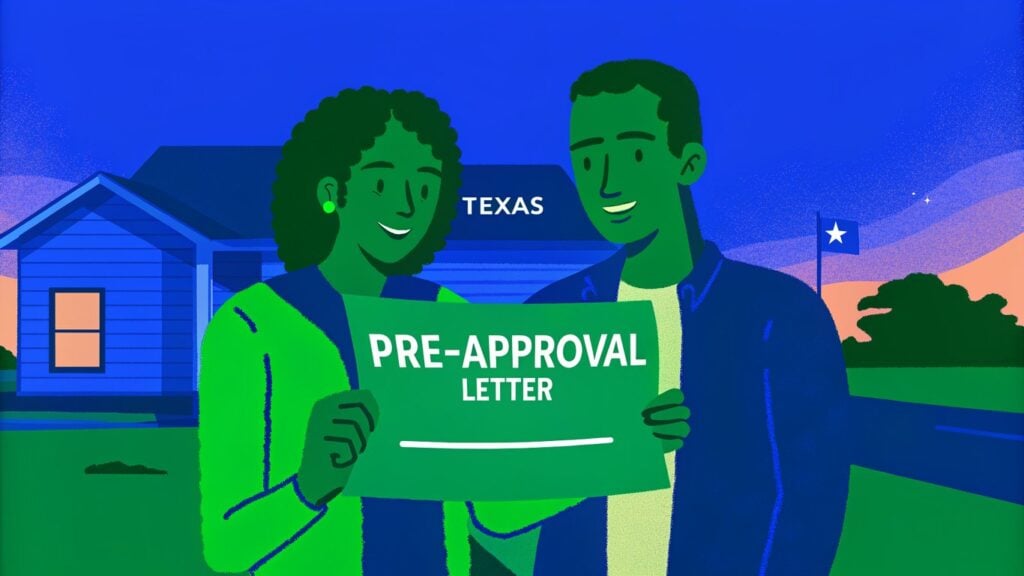
Getting pre-approved for a mortgage isn’t just a formality. It’s your ticket to being taken seriously in Texas’s competitive housing market. When you walk into a showing with a pre-approval letter in hand, sellers know you’re not just browsing.
The mortgage pre-approval process involves a lender reviewing your financial situation and giving you a conditional commitment for a specific loan amount. It’s different from casually checking what you might qualify for online.
Pre-Approval vs. Pre-Qualification: Key Differences
Pre-qualification is basically an estimate. You tell a lender about your income and debts, they run some quick numbers, and give you a ballpark figure. No verification happens. No credit check. It’s helpful for initial planning, but that’s about it.
Pre-approval is the real deal. The lender pulls your credit report, verifies your income and assets, and reviews your complete financial picture. You’ll submit actual documentation like pay stubs and bank statements. At the end, you get a letter stating how much the lender will loan you, subject to finding a property and final underwriting.

Texas sellers can spot the difference immediately. A pre-qualification letter might get a polite nod. A pre-approval letter gets you a seat at the negotiating table.
Why Pre-Approval Matters in Texas’s Competitive Market
Texas real estate moves fast. Homes in desirable areas often receive multiple offers within days of listing. Without pre-approval, you’re essentially asking sellers to gamble on whether you can actually secure financing.
Pre-approval also protects you from heartbreak. There’s nothing worse than falling in love with a house only to discover you can’t afford it. Knowing your actual budget before you start shopping saves time and emotional energy.
The process also speeds up closing once your offer is accepted. Since much of the financial verification is already complete, you can typically move from contract to closing faster than buyers starting from scratch.
Special Considerations for Texas Buyers in Unique Situations
If you’re going through a divorce, dealing with probate, or recovering from foreclosure, the mortgage pre-approval process gets more complex. You’ll need additional documentation and probably more patience. But it’s definitely still possible.
These situations don’t automatically disqualify you. They just mean you need to be more prepared and work with lenders who understand how to navigate complicated financial circumstances.
Required Documents for Mortgage Pre-Approval: Your Complete Checklist
Gathering your documents before you apply makes everything smoother. Most lenders need similar paperwork, so you can prepare one complete package and use it with multiple lenders if you’re shopping around.

Income Verification Documents
Lenders want to see consistent income that’ll continue after you buy the house. For most people with traditional employment, that means:
- Pay stubs from the last 30-60 days
- W-2 forms from the past two years
- Federal tax returns for the past two years (all pages, including schedules)
- Employer contact information for verification calls
Self-employed buyers need more documentation. Expect to provide two years of personal and business tax returns, profit and loss statements, and possibly a year-to-date P&L if you’re applying mid-year.
Asset and Financial Statements
Your lender needs to verify you have enough money for the down payment and closing costs, plus some reserves. Gather statements for:
- Checking and savings accounts (last 2-3 months)
- Investment accounts and brokerage statements
- Retirement accounts like 401(k)s or IRAs
- Documentation for any gift funds from family members
If you’ve got a large deposit that doesn’t match your regular income pattern, be ready to explain where it came from. Lenders get nervous about unexplained money because of anti-money laundering regulations.
Credit and Identity Documentation
You’ll need to provide Social Security numbers for everyone who’ll be on the loan and a government-issued photo ID like a driver’s license or passport. The lender will pull your credit report directly, but you should check your own credit beforehand to catch any errors.
If there are issues on your credit report, write a brief explanation letter. Late payments from a medical emergency or job loss look different when there’s context.
Employment Verification
Lenders typically want to see two years of stable employment history. If you’ve changed jobs recently, that’s usually fine as long as you stayed in the same field and didn’t have gaps. Bring offer letters or employment contracts if you’re new to your current position.
Expect your employer to receive a verification call. Give your HR department or supervisor a heads up so they’re not caught off guard.
Additional Documents for Special Circumstances
Going through a divorce? You’ll need your divorce decree and any settlement agreements showing how assets and debts were divided. If you receive or pay alimony or child support, bring documentation showing the payment history and terms.
Dealing with probate or estate issues requires legal documentation showing your authority to purchase property. Previous foreclosures need hardship letters explaining what happened and documentation of your financial recovery since then.
Choosing the Right Lender in Texas: A Strategic Approach
Not all lenders are created equal. The difference between a great lender and a mediocre one can mean thousands of dollars and weeks of stress.
Types of Lenders: Banks, Credit Unions, and Mortgage Companies
Traditional banks offer the comfort of an established relationship if you already bank there. They’ve got physical branches and typically competitive rates. The downside? They can be slower and less flexible with unique situations.
Credit unions often have lower fees and more personalized service. You’ll need to be a member, but membership requirements are usually pretty easy to meet. They’re particularly good if you’ve got a less-than-perfect credit situation.
Mortgage companies like Texaslending.com specialize in home loans exclusively. They often process applications faster and have more loan program options. Many Texas-based mortgage companies complete pre-approvals in under 48 hours when you’ve got all your documents ready.
Key Factors to Compare When Shopping Lenders
Interest rates matter, obviously. But a slightly higher rate with lower fees might actually cost you less. Look at the total picture.
Ask about closing costs, origination fees, and any other charges. Some lenders advertise low rates but make up for it with higher fees. Get a detailed breakdown in writing.

Processing speed can be crucial in competitive markets. If you’re competing against other buyers, a lender who can close in 21 days versus 45 days gives you a real advantage.
Questions to Ask Potential Lenders
Don’t be shy about asking direct questions. This is probably the biggest financial transaction of your life. You deserve clear answers.
- What’s your current interest rate for my situation?
- What are all the fees I’ll pay at closing?
- How long does your typical pre-approval take?
- What loan programs do you offer (conventional, FHA, VA, USDA)?
- Have you worked with buyers in my specific situation before?
- Will you service my loan or sell it to another company?
Texas-Specific Lender Considerations
Texas has unique home equity laws and property tax considerations that affect your mortgage. Working with a lender familiar with Texas regulations can prevent headaches down the road.
Property taxes in Texas are higher than many states since there’s no state income tax. Lenders need to factor these higher taxes into your debt-to-income ratio, which affects how much house you can afford. A Texas-savvy lender understands this and can help you plan accordingly.
Getting Multiple Pre-Approvals: Pros and Cons
Shopping around makes sense. Multiple credit inquiries for a mortgage within a short window (typically 14-45 days) count as a single inquiry on your credit report. This lets you compare offers without tanking your credit score.
The downside is the time investment. Each lender needs the same documentation and asks similar questions. If you’re going to shop multiple lenders, do it efficiently within that rate-shopping window.
The Mortgage Pre-Approval Process Timeline: What to Expect
Understanding the timeline helps you plan your home search. Most lenders can complete a pre-approval within one to three business days if you’ve got all your documents organized.
Step 1: Initial Application and Document Submission
You’ll start with a conversation or online application where you provide basic information about your income, assets, debts, and the type of home you’re looking to buy. Then you’ll submit all those documents we talked about earlier.
This usually takes a day or two, depending on how organized you are. Having everything ready to go speeds things up considerably.
Step 2: Credit Check and Financial Review
The lender pulls your credit report and starts analyzing your financial profile. They’re calculating your debt-to-income ratio, checking your credit score, and reviewing your payment history.
This step typically happens within a day or two of receiving your application. You might get questions if anything looks unusual or needs clarification.
Step 3: Underwriter Review and Verification
An underwriter reviews everything to make sure it meets lending guidelines. They’ll verify your employment by calling your employer and might request additional documentation if something doesn’t add up.
This is where delays typically happen if your financial situation is complex or if you’re slow to respond to requests for additional information. Stay responsive and the process moves smoothly.
Step 4: Receiving Your Pre-Approval Letter
Once everything checks out, you’ll receive your pre-approval letter. This document states the maximum loan amount you’re approved for, the type of loan, and any conditions that apply.
Pre-approval letters typically remain valid for 60-90 days. After that, you’ll need to update your documentation since your financial situation might have changed.
Factors That Can Speed Up or Delay the Timeline
Having complete, organized documentation from the start is the biggest factor in getting approved quickly. Missing documents or unclear information creates delays.
Lender workload matters too. Applying during slower periods might get you faster service than during peak home-buying season. Complex financial situations naturally take longer to review than straightforward W-2 employment.
Common Pitfalls to Avoid During the Pre-Approval Process
Getting pre-approved is just the beginning. You’ve got to maintain that approval status until closing, which means avoiding some common mistakes.
Financial Mistakes That Can Derail Your Pre-Approval
Don’t buy a car. Seriously. That new vehicle can wait until after you close on your house. Any major purchase changes your debt-to-income ratio and can invalidate your pre-approval.
Opening new credit cards is equally problematic. Even if you don’t use them, the new credit inquiry and available credit affect your financial profile. Lenders re-check your credit before closing, and new accounts raise red flags.
Changing jobs during the process is risky unless you’re moving to a better position in the same field. Lenders want employment stability. If you must change jobs, talk to your lender first.
Documentation Errors and Omissions
Incomplete paperwork slows everything down. Double-check that you’ve signed everything, included all pages of documents, and provided current information.
Failing to disclose all income sources or debts is a bigger problem. Lenders will find out eventually, and discovering undisclosed information later can kill your approval entirely.
Overestimating Your Budget
Just because you’re approved for a certain amount doesn’t mean you should spend it all. Lenders calculate the maximum you can borrow, not necessarily what you can comfortably afford.
Texas property taxes are particularly important to consider. They’re higher than many states and can significantly impact your monthly payment. Factor in insurance costs too, especially if you’re buying in areas prone to flooding or other natural disasters.
Ignoring Your Credit During the Process
Your credit gets checked again before closing. Missing a credit card payment or maxing out cards between pre-approval and closing can cause serious problems.
Keep making all payments on time and maintain your credit utilization at reasonable levels. This isn’t the time to experiment with your financial habits.
Choosing the Wrong Loan Program
Different loan types serve different purposes. Conventional loans typically require higher credit scores and down payments but offer competitive rates. FHA loans accept lower credit scores with smaller down payments. VA loans are available to veterans with no down payment required. USDA loans serve rural areas.
Make sure you’re using the loan program that best fits your situation. Your lender should help you understand the options.
Letting Your Pre-Approval Expire
Pre-approval letters don’t last forever. If your home search takes longer than expected, you’ll need to update your documentation and get a new letter. Don’t wait until you find a house to discover your pre-approval expired last month.
Maximizing Your Pre-Approval: Tips for Texas Buyers
Getting pre-approved is good. Getting pre-approved for the best possible terms is better. A little preparation goes a long way.
Improving Your Financial Profile Before Applying
If you’ve got three to six months before you want to buy, use that time strategically. Pay down credit card balances to improve your credit utilization ratio. Dispute any errors on your credit report. Build up your savings for a larger down payment.
Avoid opening new credit accounts or making major purchases during this preparation period. Stability is your friend when it comes to mortgage approval.
Understanding Texas Property Tax Implications
Texas property taxes can be a shock if you’re moving from another state. They’re typically higher because Texas doesn’t have state income tax. The state funds services through property taxes instead.
Lenders include estimated property taxes in your debt-to-income calculations, which affects your buying power. A house that seems affordable based on the mortgage payment alone might stretch your budget once you factor in Texas property taxes.
Leveraging Your Pre-Approval in Negotiations
Your pre-approval letter is a negotiating tool. It shows sellers you’re serious and capable of closing the deal. In multiple-offer situations, a strong pre-approval can tip the scales in your favor.
Work with your real estate agent to present your pre-approval effectively. Sometimes a personal letter combined with solid financing makes your offer stand out even if it’s not the highest price.
When to Update or Renew Your Pre-Approval
Update your pre-approval if your income changes, you pay off significant debt, or you want to look at homes above your current approved amount. Also update if you’re approaching the expiration date and haven’t found a house yet.
Most lenders can update your pre-approval quickly if your financial situation hasn’t changed much. It’s usually just a matter of providing updated pay stubs and bank statements.
Special Situations: Mortgage Pre-Approval Solutions for Texas Buyers
Life gets complicated. Divorce, probate, foreclosure, and self-employment all add layers to the mortgage pre-approval process. But they don’t make it impossible.
Getting Pre-Approved During or After Divorce
Divorce affects your mortgage application in several ways. You’ll need to show how assets and debts were divided. If you’re receiving alimony or child support, you can count that as income, but you’ll need documentation showing consistent payment history.
Qualifying on a single income when you’re used to dual income can be challenging. You might need to adjust your expectations about how much house you can afford. But many people successfully buy homes during or after divorce.
Pre-Approval When Buying Probate or Estate Properties
Buying a probate property requires additional legal documentation showing the estate has authority to sell. If you’re the buyer dealing with probate issues yourself, you’ll need legal documents showing your authority to purchase property.
These situations take longer to process because lenders need to verify the legal aspects. Work with a lender experienced in probate transactions.
Qualifying After Foreclosure or Short Sale
Previous foreclosures don’t permanently disqualify you from getting a mortgage. Different loan types have different waiting periods. FHA loans typically require three years after foreclosure. Conventional loans often require seven years, though sometimes less with extenuating circumstances.
You’ll need to document what caused the foreclosure and show that your financial situation has improved. Rebuilding your credit during the waiting period strengthens your application.
Self-Employed and Non-Traditional Income Buyers
Self-employed buyers face extra scrutiny because income can be less predictable. Lenders typically average your income over two years of tax returns. If your income is trending down, that can hurt your approval amount.
Keep detailed financial records and work with an accountant who understands mortgage lending. Sometimes the way you structure your business taxes affects your qualifying income more than you’d expect.
Next Steps After Pre-Approval: Moving Forward with Confidence
You’ve got your pre-approval letter. Now what? Time to put it to work finding your home.
Working with Your Real Estate Agent
Share your pre-approval letter with your real estate agent so they understand your budget. Be honest about what you’re comfortable spending versus what you’re approved for. These might be different numbers.
Your agent can help you understand what your buying power means in different Texas markets. What gets you a mansion in one area might only buy a starter home in another.
Maintaining Your Pre-Approval Status
Keep your financial situation stable. Continue making all payments on time. Don’t make major purchases or changes to your employment. Stay in touch with your lender, especially if anything in your financial situation changes.
If you’re getting close to your pre-approval expiration date, reach out to your lender proactively to discuss renewal.
From Pre-Approval to Final Approval
Pre-approval isn’t final approval. Once you’re under contract on a house, the full underwriting process begins. The lender will order an appraisal, verify your employment again, and review your finances one more time.
This is why maintaining your financial status is so important. Final approval depends on nothing changing between pre-approval and closing.
Resources for Texas Homebuyers
Texas offers several programs for homebuyers, particularly first-time buyers. The Texas State Affordable Housing Corporation provides down payment assistance and affordable mortgage programs. The Texas Department of Housing and Community Affairs offers additional resources and programs.
Local housing authorities in major cities often have their own programs too. It’s worth researching what’s available in your specific area.
Getting pre-approved for a mortgage takes some effort, but it’s worth it. You’ll shop for homes with confidence, negotiate from a position of strength, and move through the buying process more smoothly. Take the time to get it right, and you’ll be glad you did when you’re holding the keys to your new Texas home.