
What is Owner (Seller) Financing?
Owner financing flips the traditional home-buying script. Instead of getting a mortgage from a bank, you’re borrowing directly from the person selling the property. The seller becomes your lender, and you make monthly payments to them rather than to Chase or Wells Fargo.

This arrangement goes by several names. You might hear it called seller financing, owner carry-back, or seller carry. They all mean the same thing.
Here’s what makes it different from traditional financing: there’s no bank underwriting process, no strict credit score requirements, and no waiting weeks for loan approval. You negotiate terms directly with the seller. That includes the interest rate, down payment amount, and repayment schedule.
In Houston’s real estate market, owner financing has carved out a meaningful niche. It’s particularly common with land sales, investment properties, and homes that might not qualify for conventional financing.
The Basic Process: How Owner Financing Works

The process starts with finding a seller willing to offer financing. Once you’ve agreed on a price, you’ll negotiate the financing terms. This includes the down payment (typically 10-20%), interest rate, monthly payment amount, and loan duration.
You’ll sign a promissory note that outlines your obligation to repay the loan. The property serves as collateral, secured by either a deed of trust or land contract, depending on the structure you choose.
After closing, you make regular payments to the seller. These payments typically include principal and interest, similar to a traditional mortgage. You’re responsible for property taxes, insurance, and maintenance.
Many owner-financed deals include a balloon payment. This means you’ll make smaller monthly payments for a set period (often 3-5 years), then pay off the remaining balance in one lump sum. The expectation is that you’ll refinance with a traditional lender before the balloon payment comes due.
Why Owner Financing is Growing in Houston’s Market
Houston’s housing market has created conditions where owner financing makes sense for many buyers and sellers. Rising home prices have pushed some buyers out of traditional financing range. Self-employed individuals and small business owners often struggle to document income in ways that satisfy conventional lenders.
Credit challenges affect a significant portion of potential buyers. Maybe someone went through a foreclosure during the 2008 crisis, or they’re rebuilding after a divorce. Traditional lenders might say no, but sellers can evaluate the whole picture.
For sellers, Houston’s diverse real estate market means some properties sit longer than others. Offering owner financing can attract buyers who might otherwise pass on a property.
Common Owner Financing Structures in Texas
Land Contract (Contract for Deed)
A land contract keeps the property title in the seller’s name until you’ve paid off the entire loan. You get equitable title, which means you have the right to possess and use the property, but the seller retains legal title.
This structure offers strong protection for sellers. If you default, they can cancel the contract and reclaim the property without going through formal foreclosure proceedings. But it also creates risk for buyers since you don’t hold the title.
Land contracts are common for raw land sales in Texas. They’re less common for residential properties in Houston, where buyers typically prefer structures that give them immediate title.
Promissory Note with Mortgage or Deed of Trust
This is probably the most common owner financing structure in Houston. You receive the property title at closing, but the seller holds a lien against the property through a deed of trust.
You sign a promissory note promising to repay the loan according to agreed terms. The deed of trust secures that promise. If you default, the seller can foreclose, but they must follow Texas foreclosure procedures.
This structure feels more like traditional financing. You own the property outright (subject to the lien), can make improvements, and build equity from day one. The seller has security through the lien but must follow legal procedures if things go wrong.
Lease-Purchase Agreement
A lease-purchase sits somewhere between renting and buying. You lease the property with an option to purchase it later. Part of your monthly rent payment might be credited toward the eventual purchase price.
You typically pay an option fee upfront (maybe 2-5% of the purchase price). This gives you the right to buy the property within a specified timeframe, usually 1-3 years.
The advantage? You can lock in a purchase price while working on your credit or saving for a larger down payment. The downside is that if you don’t exercise your option, you lose the option fee and any rent credits.
All-Inclusive Deed of Trust (Wraparound Mortgage)
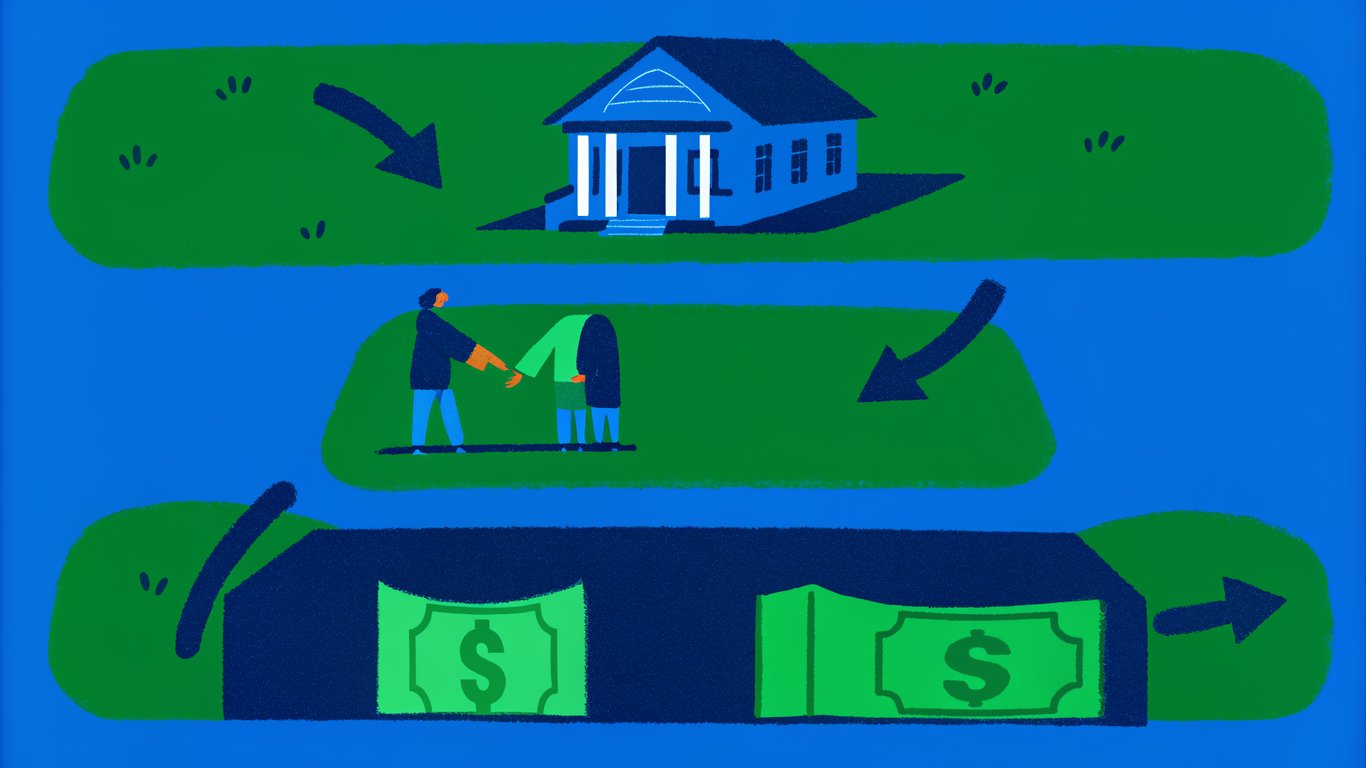
A wraparound mortgage gets complicated. The seller still owes money on their original mortgage but finances the property to you at a higher interest rate. Your payment to the seller “wraps around” their existing mortgage payment.
The seller collects your payment, keeps the difference between what you pay and what they owe, then makes their mortgage payment to their lender.
This structure carries significant risk. Most mortgages include a due-on-sale clause that allows the lender to demand full payment if the property changes hands. If the original lender discovers the arrangement and calls the loan, everyone’s in trouble.
Choosing the Right Structure for Your Situation
Your choice depends on several factors. Buyers typically prefer structures that give them immediate title, like a promissory note with deed of trust. Sellers often favor arrangements that make it easier to reclaim the property if things go wrong.
The property type matters too. Raw land deals often use land contracts. Residential properties in Houston more commonly use promissory notes with deeds of trust.
Working with a real estate attorney who understands Texas law is essential. They can explain the implications of each structure and help you choose the one that protects your interests.
Essential Contract Components and Documentation
Required Contract Terms and Clauses
Every owner financing agreement needs certain basic elements. The purchase price must be clearly stated, along with the down payment amount. You’ll need to specify the interest rate, monthly payment amount, and payment due date.
The loan term matters. Will you pay it off over 15 years? 30 years? Or will there be a balloon payment after 5 years? This needs to be crystal clear.
Late payment penalties should be defined. What happens if you’re 10 days late? 30 days? Most agreements include a grace period before penalties kick in.
- Purchase price and down payment amount
- Interest rate and how it’s calculated
- Monthly payment amount and due date
- Loan term and maturity date
- Late payment penalties and grace periods
- Default provisions and remedies
Property Description and Title Requirements
The property must be described using its legal description from the deed. Street addresses aren’t enough. You need the lot number, block number, subdivision name, and county where it’s located.
Title insurance protects both parties. As a buyer, you want to know there aren’t hidden liens or ownership disputes. Sellers want assurance they’re conveying clear title.
A title search through a company like Stewart Title or Fidelity National Title reveals any existing liens, easements, or other encumbrances. This step isn’t optional.
Default and Remedies Provisions
Default provisions spell out what happens if you can’t make payments. Most agreements define default as missing a certain number of payments or failing to maintain insurance.
Texas allows non-judicial foreclosure, which means the seller can foreclose without going to court if the deed of trust includes a power of sale clause. The process still requires proper notice and following specific timelines.
Acceleration clauses let the seller demand immediate payment of the entire remaining balance if you default. This is standard in most financing agreements.
Insurance, Taxes, and Maintenance Responsibilities
You’re typically responsible for maintaining homeowner’s insurance with the seller named as a loss payee. If the property burns down, the insurance payout goes toward the loan balance.
Property taxes are usually your responsibility. In Harris County, you’ll pay these directly to the Harris County Tax Office. Some agreements require you to provide proof of payment to the seller.
If the property is in an HOA, you’re responsible for those fees too. Maintenance and repairs fall on you as well, unless the agreement specifies otherwise.
Prepayment and Balloon Payment Terms
Some sellers include prepayment penalties to discourage early payoff. Others allow prepayment without penalty. This should be negotiated upfront.
Balloon payments are common in owner financing. You might make payments based on a 30-year amortization schedule, but the entire remaining balance comes due after 5 years. This gives you time to improve your credit and refinance with a traditional lender.
Benefits of Owner Financing for Houston Sellers
Expanded Buyer Pool and Faster Sales
Offering owner financing homes in Houston opens your property to buyers who can’t get traditional financing. That’s a substantial market segment. Self-employed individuals, recent immigrants, and people rebuilding credit all become potential buyers.
Properties that might sit on the market for months can sell faster when you offer financing. You’re solving a problem for buyers who have money for a down payment but can’t qualify for a mortgage.
Higher Sale Price and Interest Income
Sellers who offer financing can often command a premium price. Buyers are willing to pay more for the convenience and flexibility of owner financing.
You’ll earn interest income over the life of the loan. If you finance a $300,000 property at 7% interest over 5 years, you’ll collect significant interest on top of the principal. This creates a steady income stream, which appeals to retirees or investors looking for passive income.
Tax Advantages Through Installment Sales
Owner financing can qualify as an installment sale for tax purposes. Instead of paying capital gains tax on the entire profit in one year, you spread it over multiple years as you receive payments.
Texas doesn’t have state income tax, which helps. But you’ll still owe federal capital gains tax on your profit. Spreading that tax liability over several years can keep you in a lower tax bracket.
Talk to a CPA who understands installment sales. The rules are specific, and you need to report the sale correctly to get the tax benefits.
Reduced Closing Costs and Fees
Traditional sales involve lender fees, appraisal costs, and various other charges. Owner financing eliminates many of these expenses. There’s no loan origination fee, no appraisal requirement (though you might want one anyway), and no lender’s title insurance.
You’ll still have some closing costs. Title insurance, recording fees, and attorney fees are still necessary. But the total is typically lower than a traditional sale.
Retained Security Interest in the Property
If the buyer defaults, you can reclaim the property through foreclosure. You’ve already collected a down payment and several months or years of payments. The property might have appreciated in value during that time.
This security interest makes owner financing less risky than it might seem. You’re not just hoping the buyer pays. You have legal recourse if they don’t.
Benefits of Owner Financing for Houston Buyers
Easier Qualification and Flexible Credit Requirements
Banks have rigid requirements. Credit scores below 620 make conventional financing difficult. Self-employment income needs two years of tax returns and extensive documentation. Recent bankruptcies or foreclosures create waiting periods.
Owner financing bypasses all of that. The seller decides whether you’re creditworthy. They might care more about your down payment size and current income than your credit score from three years ago.
This doesn’t mean sellers ignore credit entirely. Most will check your credit and verify your income. But they have flexibility that banks don’t.
Faster Closing Process
Traditional mortgages take 30-45 days to close, sometimes longer. Owner financing can close in a week or two. There’s no underwriting process, no appraisal contingency, and no waiting for loan committee approval.
You still need title work and legal documents prepared. But the timeline is much shorter. If you need to move quickly, owner financing makes that possible.
Negotiable Terms and Customized Agreements
Everything is negotiable in owner financing. The interest rate, down payment, monthly payment amount, and loan term are all up for discussion.
Maybe you can afford a larger down payment in exchange for a lower interest rate. Or perhaps you need a longer loan term to keep payments affordable. These conversations happen directly with the seller, not through a loan officer following bank guidelines.
Lower Upfront Costs
Closing costs are typically lower without a traditional lender involved. You’re not paying loan origination fees, discount points, or lender’s title insurance.
Down payment requirements are often more flexible too. While 20% is common, some sellers accept 10% or even less if you have strong income and good credit.
Building Equity and Credit
Every payment builds equity in your home. If the property appreciates, you benefit from that appreciation just like any homeowner.
Making consistent payments can help rebuild your credit, especially if the seller reports payments to credit bureaus. Not all sellers do this, so ask upfront if credit reporting is part of the arrangement.
Texas-Specific Legal Considerations and Regulations
Texas Property Code Requirements
Texas Property Code includes specific provisions for seller-financed transactions. Sellers must provide certain disclosures about the property’s condition and any known defects.
The code also protects buyers in executory contracts (land contracts). Sellers must provide annual accounting statements showing payment application and remaining balance. They must also give proper notice before declaring default.
Dodd-Frank Act and Seller Financing Rules
Federal regulations affect owner financing through the Dodd-Frank Act. The rules are designed to prevent predatory lending while allowing legitimate seller financing.
Sellers can finance up to three properties per year without being considered a loan originator. The loan must have a fixed interest rate (no adjustable rates) and be fully amortizing (no balloon payments) unless the buyer is an investor or the seller is financing their own residence.
Sellers must also determine the buyer’s ability to repay. This doesn’t require the same documentation as a bank, but you can’t ignore obvious red flags.
SAFE Act Licensing Considerations
The Secure and Fair Enforcement Act requires mortgage loan originators to be licensed. But individual property owners financing their own properties are generally exempt.
If you’re financing more than three properties per year, or if you’re in the business of buying and selling properties with owner financing, you might need a license. This is where things get complicated, and you need legal advice.
Foreclosure Laws and Procedures in Texas
Texas allows non-judicial foreclosure, which is faster and less expensive than judicial foreclosure. The deed of trust must include a power of sale clause, which is standard in Texas.
The seller must provide proper notice of default and intent to accelerate. The buyer gets at least 20 days to cure the default. If they don’t, the seller can post notice of foreclosure sale at the county courthouse and in local newspapers.
The foreclosure sale happens on the first Tuesday of the month at the county courthouse. The property is sold to the highest bidder, with proceeds going to pay off the loan.
Homestead and Due-on-Sale Clause Issues
Texas has strong homestead protections. If the property is your primary residence, certain creditors can’t force a sale to satisfy debts. These protections extend to owner-financed properties.
Due-on-sale clauses create risk in wraparound mortgages. If the seller still owes money on their original mortgage, that lender can demand full payment when the property changes hands. Some lenders don’t enforce these clauses, but you’re taking a chance.
Required Disclosures and Documentation
Texas requires sellers to complete a Seller’s Disclosure Notice for residential properties. This form asks about the property’s condition, including foundation issues, roof problems, and environmental hazards.
All financing documents must be recorded with Harris County. This includes the deed, deed of trust, and promissory note. Recording protects both parties by creating a public record of the transaction.
Risks, Challenges, and How to Mitigate Them
Risks for Sellers
Buyer default is the biggest risk. You might need to foreclose, which takes time and money. During that time, the property might deteriorate if the buyer stops maintaining it.
Your equity is tied up in the property. You can’t access that money unless the buyer refinances or pays off the loan early. This opportunity cost matters if you need the cash for other investments.
Property damage is another concern. The buyer might not maintain the property properly, reducing its value if you need to take it back.
Risks for Buyers
If the seller files bankruptcy, you could face complications. The bankruptcy trustee might try to sell the property, though your rights as a buyer should be protected.
Existing liens can create problems. If the seller didn’t disclose a tax lien or contractor’s lien, you might be responsible for paying it.
Balloon payments create refinancing risk. If you can’t qualify for a traditional mortgage when the balloon payment comes due, you could lose the property.
Due Diligence Essentials
Always get a title search. This reveals any existing liens, judgments, or other claims against the property. Don’t skip this step.
Have the property inspected by a licensed inspector. You need to know about foundation issues, roof problems, and other major defects before you commit.
Verify the seller’s financial situation. If they still owe money on the property, make sure they’re current on payments. Check for tax liens or other judgments.
Protecting Your Investment
Title insurance protects against hidden title defects. Both owner’s and lender’s policies are available. Get both.
Have an attorney draft or review all documents. Generic forms from the internet don’t account for Texas-specific requirements or your unique situation.
Consider using an escrow service for payments. The buyer pays the escrow company, which then pays the seller and handles property tax payments. This creates a paper trail and ensures taxes get paid.
When to Walk Away
Some deals aren’t worth pursuing. If the seller refuses to provide a title search or won’t allow a property inspection, walk away.
Unreasonable terms are another red flag. Interest rates significantly above market rates, excessive prepayment penalties, or balloon payments due in less than three years should make you cautious.
If the seller still owes more on the property than the agreed purchase price, that’s a problem. You don’t want to be caught in a short sale situation.
Getting Started with Owner Financing in Houston: Practical Steps
Finding Owner Financing Homes in Houston
Start your search for owner financing homes in Houston on Zillow, Realtor.com, and HAR.com (Houston Association of Realtors). Use search filters for “owner financing” or look for keywords in property descriptions.
Drive around neighborhoods you’re interested in. Look for “For Sale by Owner” signs that mention financing available. These sellers are often more flexible than those working with traditional agents.
Network with real estate investors and attend local real estate meetups. Many investors offer owner financing on properties they’re selling.
Structuring Your First Deal
Research current interest rates for owner-financed properties in Houston. They’re typically 1-3 percentage points higher than conventional mortgage rates.
Determine what down payment you can afford. Aim for at least 10%, though 20% gives you more negotiating power on other terms.
Calculate monthly payments you can comfortably afford. Don’t forget to include property taxes, insurance, and HOA fees in your budget.
Assembling Your Professional Team
Find a real estate attorney who specializes in owner financing. They’ll draft or review contracts, ensure compliance with Texas law, and protect your interests.
Work with a title company experienced in owner-financed transactions. They’ll conduct the title search, issue title insurance, and handle the closing.
Consult with a CPA about tax implications. They can explain how to report payments and take advantage of available deductions.
Finalizing the Agreement and Closing
Review all documents carefully before signing. Make sure you understand every term and condition. Don’t sign anything you’re uncomfortable with.
The closing process involves signing the promissory note, deed of trust, and other required documents. The deed must be recorded with Harris County to transfer title.
Get copies of all signed documents. Keep them in a safe place. You’ll need them for tax purposes and if any disputes arise.
Managing the Ongoing Relationship
Set up automatic payments if possible. This ensures you never miss a payment and creates a clear payment history.
Keep detailed records of all payments, including dates, amounts, and check numbers. This documentation is crucial if any disputes arise.
Maintain open communication with the seller. If you’re going to be late on a payment, let them know immediately. Most sellers will work with you if you’re upfront about temporary difficulties.
Start planning for refinancing early if you have a balloon payment. Don’t wait until the last minute to apply for a traditional mortgage. Work on improving your credit and saving additional funds to make refinancing easier when the time comes.