
If you’ve ever tried selling a house while simultaneously buying another one, you know the stress. You’re juggling showings, dealing with contingent offers, and probably losing sleep over whether you’ll end up owning two homes or none at all. A home trade-in program offers a different path, one that’s gained traction in Texas markets over the past few years.

What Is a Home Trade-In Program?
A home trade-in program lets you sell your current house to a company or homebuilder, often before you’ve even closed on your next property. Think of it like trading in your car at a dealership, except the stakes are considerably higher and the process more complex.
These programs differ from traditional cash buyer companies in a key way. While cash buyers simply purchase your home outright, trade-in programs typically tie your sale to the purchase of another property. The company buys your existing home, allowing you to use that equity immediately for your next purchase without the usual waiting period.
It’s not the same as listing with an agent either. You won’t have strangers walking through your home every weekend. There’s no staging, no open houses, and usually no lengthy negotiation process.
The Home Trade-In Process: Step-by-Step
Here’s how most trade-in programs work in practice:
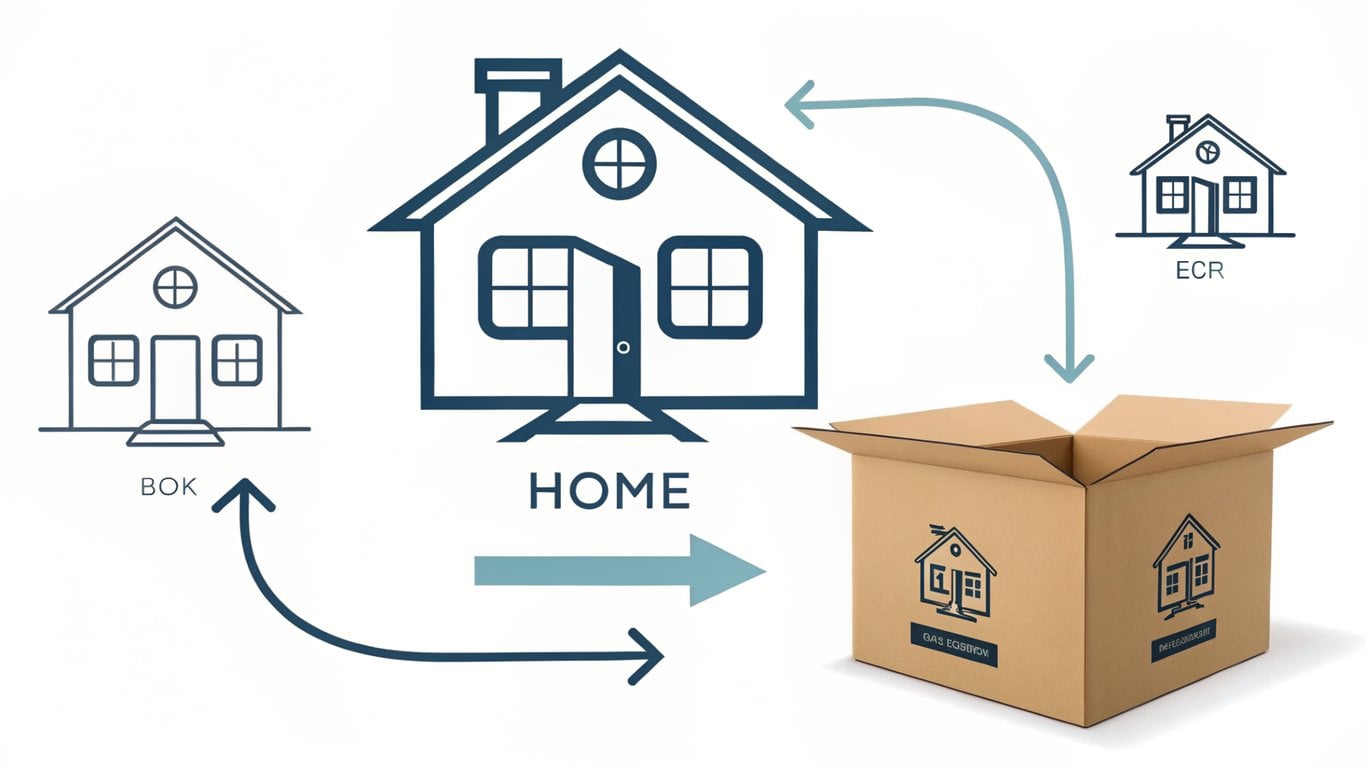
- You submit basic information about your current home through an online form or phone call
- The company conducts a property assessment, either virtually or through an in-person inspection
- You receive a cash offer, typically within 24-48 hours
- If you accept, you can use that offer to secure financing or make an offer on your next home
- The company handles the sale of your current property while you move into your new one
- Both transactions close, often within 7-14 days for the initial property
The timeline varies by company, but it’s generally much faster than traditional sales. Some programs let you stay in your current home until your new one is ready, which solves the awkward gap between selling and buying.
Types of Home Trade-In Programs Available in Texas
Texas homeowners have access to several types of trade-in programs, each with different structures and benefits.
iBuyers like Opendoor and Offerpad use algorithms to make instant offers on homes. They’re active in major Texas metros including Houston, Dallas, Austin, and San Antonio. These companies buy your home directly, renovate it, and resell it on the open market.
Builder trade-in programs are offered by homebuilders like Riverside Homebuilders. If you’re buying new construction, the builder purchases your existing home as part of the deal. This streamlines the entire process since you’re working with one company for both transactions.
Hybrid services like Knock and Orchard take a different approach. They provide the cash to buy your new home first, then help you sell your old one without the pressure of carrying two mortgages. It’s more flexible but typically comes with higher fees.
Who Offers Home Trade-In Programs in Texas?
The Texas market has several active players. Opendoor operates extensively across the state’s major metropolitan areas. Local companies like House Buyers Texas and Texas All Cash Home Buyers focus specifically on the state’s market conditions and regulations.

Many national homebuilders operating in Texas offer their own trade-in programs, particularly in growing suburbs around Dallas, Houston, and Austin where new construction is booming. Availability varies by location, so rural homeowners might have fewer options than those in urban centers.
Costs and Fees Associated with Home Trade-In Programs
The convenience of a home trade-in program comes at a price. Understanding exactly what you’ll pay helps you make an informed decision about whether the speed and certainty are worth the cost.
Service Fees and Commissions
Most trade-in programs charge a service fee that ranges from 1% to 7% of your home’s value. This fee covers the company’s operational costs, risk, and profit margin. It’s often comparable to what you’d pay in real estate commissions through a traditional sale, though the structure differs.
Some companies advertise lower fees but make up the difference through other charges or by offering below-market prices. You need to look at the total package, not just the headline fee percentage.
Repair and Renovation Deductions
Here’s where things get tricky. Trade-in companies assess your property’s condition and deduct estimated repair costs from their offer. If your roof needs replacing or your HVAC system is on its last legs, expect significant deductions.
These deductions aren’t always transparent upfront. The initial offer might look attractive, but after the inspection, you could see thousands subtracted for repairs you didn’t even know were necessary. Companies typically use contractor pricing, which might be higher than what you’d pay if you handled repairs yourself.
Hidden Costs to Watch For
Beyond the obvious fees, watch for these additional costs:
- Holding costs: Some programs charge daily fees if you stay in the home past a certain date
- Transaction fees: Administrative charges that can add up to several hundred dollars
- Convenience charges: Extra fees for expedited closings or flexible move-out dates
- Cancellation fees: Penalties if you back out after accepting an offer
Read the fine print carefully. What seems like a straightforward offer can include clauses that reduce your net proceeds significantly.
Total Cost Comparison: Trade-In vs. Traditional Sale

Let’s look at a real example with a $300,000 home in Houston:
| Cost Item | Trade-In Program | Traditional Sale |
|---|---|---|
| Sale Price | $285,000 | $300,000 |
| Service Fee/Commission | $8,550 (3%) | $18,000 (6%) |
| Repair Deductions | $12,000 | $5,000 |
| Closing Costs | $3,000 | $3,000 |
| Staging/Prep | $0 | $2,000 |
| Net Proceeds | $261,450 | $272,000 |
In this scenario, the traditional sale nets about $10,000 more, but it probably takes 30-60 days longer and requires more effort. Whether that tradeoff makes sense depends on your situation.
Eligibility Requirements for Home Trade-In Programs in Texas
Not every home or homeowner qualifies for trade-in programs. Companies have specific criteria to manage their risk and ensure profitable transactions.
Property Requirements and Restrictions
Most programs focus on single-family homes in good condition within certain price ranges. Typical requirements include:
- Home values between $100,000 and $750,000 (varies by company and market)
- Built after 1960 in most cases
- No major structural issues or foundation problems
- Located in established neighborhoods with comparable sales data
- Standard property types (condos, townhomes, and unique properties often excluded)
If your home has significant deferred maintenance, extensive custom features, or sits on a large acreage, you’ll probably face rejection or a lowball offer.
Homeowner Financial Qualifications
You’ll need sufficient equity in your current home. Most programs require at least 10-15% equity, though some accept less. If you’re underwater on your mortgage or barely breaking even, trade-in programs won’t work.
Your mortgage must be current with no liens or judgments against the property. Credit requirements vary, but if you’re buying another home through the program, you’ll need to qualify for financing on that purchase.
Special Situations: Divorce, Probate, and Foreclosure

Trade-in programs can help in complicated situations, but they’re not always the best solution. In divorce cases, both parties must agree to the sale terms, which can be challenging when emotions run high. The quick timeline might appeal to couples wanting a clean break, but the lower net proceeds could become another point of contention.
For probate sales, you’ll need clear title and authority to sell. Some programs work with estate executors, but the process takes longer than standard transactions. If you’re facing foreclosure, a trade-in program might help if you have enough equity to cover the mortgage payoff plus fees. However, many homeowners in this situation don’t have sufficient equity, making direct cash buyers a better option.
Geographic Availability in Texas
Major Texas cities have the most options. Houston, Dallas, Austin, San Antonio, and Fort Worth all have multiple trade-in programs operating. Suburban areas around these metros typically qualify too.
Rural Texas is a different story. Small towns and remote properties often fall outside service areas. The companies need sufficient market data and resale potential, which rural areas sometimes lack.
How to Evaluate Trade-In Offers: What Texas Sellers Need to Know
Getting an offer is just the beginning. You need to analyze it carefully to understand what you’re actually receiving.
Understanding Your Trade-In Offer Breakdown
A typical offer letter includes several components. The initial price is what catches your eye, but it’s rarely what you’ll receive. Look for the repair deductions section, which lists specific items the company plans to fix and their estimated costs.
The service fee should be clearly stated as a percentage or dollar amount. Check for any contingencies that could change the offer, such as final inspection results or appraisal requirements. The net proceeds line shows what you’ll actually walk away with after all deductions.
Comparing Your Offer to Market Value
Don’t accept an offer without knowing your home’s true market value. Pull recent sales data for comparable homes in your neighborhood through the Texas MLS or public records. Look for homes with similar square footage, age, and condition that sold within the past three months.
Consider getting a professional appraisal or at least a comparative market analysis from a local real estate agent. This costs money upfront but could save you thousands if it reveals your trade-in offer is significantly below market value.
Red Flags and Warning Signs in Trade-In Offers
Watch for these warning signs:
- Offers more than 10-15% below comparable sales without clear justification
- Vague repair deduction categories without itemized costs
- High-pressure tactics urging you to accept immediately
- Fees that aren’t clearly explained in the initial offer
- Companies unwilling to answer questions about their valuation method
If something feels off, trust your instincts. Legitimate companies should be transparent about their process and pricing.
Negotiating Your Trade-In Offer
Yes, you can negotiate. Start by questioning specific repair deductions. If the company claims your roof needs $8,000 in work, get your own estimate. Present competing offers if you have them. Some companies will match or beat competitor pricing to win your business.
Ask about reducing fees in exchange for a faster closing or accepting the property as-is. The worst they can say is no, and you might be surprised by their flexibility when they want to close a deal.
Texas Home Trade-In vs Traditional Sale: A Detailed Comparison
The choice between a trade-in program and traditional listing isn’t always obvious. Each method has distinct advantages depending on your priorities.
Speed and Convenience Comparison
Trade-in programs typically close in 7-14 days once you accept an offer. Traditional sales in Texas markets average 30-60 days, sometimes longer if you encounter buyer financing issues or inspection problems.
The convenience factor is substantial. With a trade-in, you skip the showings, open houses, and constant home maintenance. Your weekends remain your own. Traditional sales require keeping your home show-ready for weeks or months, which is exhausting if you have kids, pets, or a busy work schedule.
Net Proceeds Analysis
Traditional listings generally net more money, but not always. In a strong seller’s market, you might receive multiple offers above asking price, making the traditional route clearly superior financially. In a slower market, the difference narrows.
Factor in the costs you avoid with trade-ins: no staging expenses, no ongoing utility and maintenance costs during the listing period, and no risk of price reductions if your home sits on the market. These savings can offset some of the lower sale price.
Certainty and Risk Factors
Traditional sales fall through more often. Buyers lose financing, inspections reveal deal-breaking issues, or appraisals come in low. Each failed deal means starting over, potentially losing weeks or months.
Trade-in programs offer certainty. Once you accept an offer and complete the inspection, the deal typically closes. There’s no buyer financing to worry about, no appraisal contingencies, and minimal risk of last-minute surprises.
Effort and Hassle Considerations
Traditional sales demand significant effort. You’ll coordinate with your agent, prepare for showings, handle repairs, negotiate with buyers, and manage the closing process. It’s essentially a part-time job for several weeks.
Trade-in programs minimize your involvement. Fill out an application, allow an inspection, review the offer, and sign paperwork. Most of the heavy lifting happens behind the scenes.
Texas-Specific Market Considerations
Texas has no state income tax, but property taxes are among the highest in the nation. The longer your home sits on the market, the more you’ll pay in property taxes. This makes the speed of trade-in programs particularly attractive for Texas sellers.
Texas disclosure laws require sellers to complete a detailed disclosure notice about the property’s condition. Trade-in companies handle this differently than traditional buyers, often accepting properties as-is with fewer disclosure concerns.
When Home Trade-In Programs Make Sense (and When They Don’t)
The right choice depends entirely on your specific circumstances. Here’s how to think through the decision.
Ideal Scenarios for Using Trade-In Programs
Trade-in programs shine when you’re facing a job relocation with a tight deadline. If your employer needs you in a new city within 30 days, you don’t have time for a traditional sale. The certainty and speed justify the lower proceeds.
Buying new construction often works well with trade-in programs, especially if the builder offers one. You can coordinate both transactions seamlessly without worrying about timing gaps or carrying two mortgages.
If you’ve found your dream home but it requires a non-contingent offer, a trade-in program gives you the cash position to compete. In competitive Texas markets, sellers often prefer non-contingent offers, and a trade-in program makes that possible.
When Traditional Listing Is the Better Choice
If you own a unique property with custom features, historical significance, or unusual characteristics, traditional listing is probably better. Trade-in companies prefer cookie-cutter homes they can easily resell. Your unique property might attract a premium price from the right buyer, but trade-in algorithms will likely undervalue it.
In a strong seller’s market where homes receive multiple offers, you’re leaving money on the table with a trade-in. When demand exceeds supply, traditional sales often result in above-asking prices that trade-in programs won’t match.
If maximizing equity is your top priority and you have time to wait, traditional listing makes sense. The extra weeks or months might net you tens of thousands more dollars.
Special Circumstances: Divorce, Inheritance, and Financial Distress
Divorce situations benefit from the speed and simplicity of trade-in programs. Both parties want to move on quickly, and the streamlined process reduces opportunities for conflict. However, the lower proceeds might create disputes about asset division.
Inherited properties often need work, and heirs might not want to invest in repairs. Trade-in programs accept properties as-is, making them attractive for estate sales. But if the inherited home is in a desirable area or has appreciated significantly, a traditional sale might better honor the estate’s value.
Financial distress is complicated. If you’re facing foreclosure but have equity, a trade-in program might help you avoid foreclosure and preserve some equity. But if you’re underwater or barely breaking even, you’ll need to explore other options like short sales or deed-in-lieu arrangements.
Alternative Options to Consider
Direct cash buyers purchase homes quickly without the trade-in component, which works if you’re not simultaneously buying another property.
Auctions can work for unique properties or situations requiring absolute certainty of sale by a specific date. For-sale-by-owner (FSBO) saves on commission but requires significant effort and expertise. Discount brokers offer reduced commission rates while still providing MLS exposure.
Making Your Decision: Action Steps for Texas Home Sellers
You’ve got the information. Now it’s time to make a decision that fits your specific situation.
Step 1: Assess Your Priorities and Timeline
Start by honestly evaluating what matters most. Rank these factors in order of importance:
- Maximum sale price and net proceeds
- Speed of sale and closing timeline
- Convenience and minimal effort required
- Certainty that the deal will close
- Flexibility with move-out dates
If price tops your list and you have time, traditional listing probably makes sense. If speed and certainty matter most, explore trade-in programs.
Step 2: Get Multiple Offers and Estimates
Don’t rely on a single offer. Request quotes from at least three trade-in companies if you’re considering that route. The offers will vary, sometimes significantly.
Simultaneously, contact two or three local real estate agents for comparative market analyses. These are typically free and give you a realistic picture of what your home might sell for through traditional channels.
Step 3: Calculate Your True Net Proceeds
Create a spreadsheet comparing your options. For each scenario, calculate:
- Expected sale price
- All fees and commissions
- Repair costs or deductions
- Closing costs
- Carrying costs (mortgage, taxes, utilities) during the sale period
- Final net proceeds
This exercise often reveals that the gap between trade-in and traditional sale isn’t as large as it initially appears once you factor in all costs.
Step 4: Review Terms and Make an Informed Choice
Before committing, review these final considerations:
- Read all contract terms carefully, especially cancellation policies
- Understand exactly when you’ll receive your proceeds
- Clarify move-out requirements and any flexibility
- Verify the company’s reputation through reviews and Better Business Bureau ratings
- Confirm there are no hidden fees or last-minute charges
Trust your gut. If something feels wrong or too good to be true, take a step back and reconsider.
Resources for Texas Home Sellers
The Texas Real Estate Commission provides consumer resources and complaint processes if you encounter problems. The Better Business Bureau offers company ratings and reviews to help you vet trade-in programs.
Local real estate attorneys can review contracts before you sign, which is especially valuable for complex situations involving divorce or probate. The cost of an hour of legal review is minimal compared to the potential financial impact of your decision.
Home trade-in programs aren’t right for everyone, but they solve real problems for many Texas sellers. The key is understanding exactly what you’re getting, what you’re giving up, and whether that tradeoff makes sense for your situation. Take your time, do your homework, and make the choice that best serves your needs.